A finance lead we spoke with earlier this year had three quotes on her desk for the same piece of work. She wanted invoice data pushed out of a shared mailbox and into the accounting system without anyone retyping it. The quotes were roughly $4,000, $38,000, and "let's start with a discovery phase." Same brief, same systems, same company, yet none of the three vendors explained why their number looked the way it did.
That gap is the real problem with AI integration cost. The work isn't mysterious, but the pricing is presented as if it were. What follows is a plain breakdown of what you're actually paying for, what pushes the number up, what quietly keeps charging you after launch, and how to sanity-check a quote before you sign anything.
The short answer on what AI integration cost depends on
Three things set the price. How many systems the AI has to touch, how severe the consequences are if it gets something wrong, and how much of your existing data needs cleaning before any model can use it.
A single-purpose integration with one system, read-only, with a human approving the output, is the cheap end. Think of a classifier that reads incoming support email and tags it in your helpdesk. Nothing moves money, nothing is irreversible, and a person still clicks the button.
The expensive end has the AI writing into systems of record, reconciling across entities, or producing output that a regulator or an auditor might read later. There the cost isn't the model call. It's the validation logic, the audit trail, the rollback path, and the testing against your odd historical data.
The thing nobody mentions in a sales call is that most of the budget goes to plumbing, not intelligence. The model is a commodity you rent by the token. The work is getting your data into a shape the model can use and getting its output back into your systems safely. We price fixed and name the number before work starts, which forces that scoping honesty on us as much as on the client.
AI implementation cost factors that move the number most
The list below is roughly in order of impact, and it's worth reading in that order since the first items carry most of the swing in a quote.
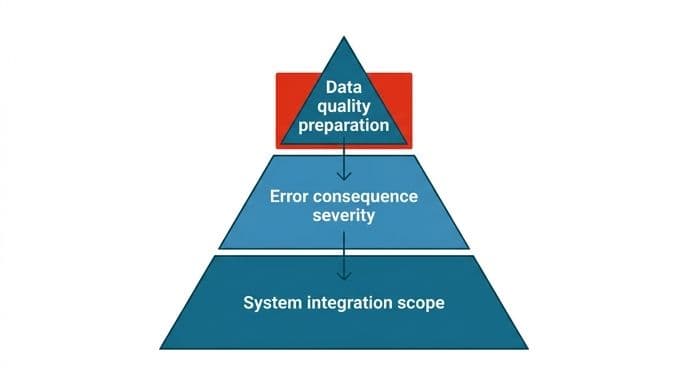
- Data readiness. If your records live in one system, with consistent fields, an integration is weeks of work. If they're spread across a CRM, three spreadsheets, and a folder of PDFs with inconsistent naming, half the project is data work before any AI is involved.
- Number of integration points. Each system you connect adds authentication, error handling, rate limits, and a new way for things to break at 2am. Two systems is not twice one system, it's closer to three times.
- Write access. Reading data is cheap. Writing back into a ledger, a patient record, or a customer-facing field needs approval flows, reversibility, and logs. We hold to a simple rule: a person approves anything that touches money or a customer, and that approval step is part of the build, not an afterthought.
- Compliance surface. If records can't leave your infrastructure, you're looking at private deployment, which raises build and hosting costs but removes the vendor-retention question entirely.
- Volume and latency. Batch processing overnight is cheap. Sub-second response for thousands of concurrent users is an infrastructure problem with an infrastructure price.
Anything else a vendor lists as a cost driver is usually a subset of these five.
What a Perplexity-style AI app actually costs to build
Teams keep asking what it takes to build something comparable to the well-known AI products they use daily, because it's the only benchmark they have. It's a sound instinct and a misleading anchor.
Those products are search infrastructure with a chat interface on top. The visible layer, a text box and streaming answers, is the small part. The cost sits in crawling, indexing, ranking, caching, and the inference bill that arrives whether or not anyone pays you. Matching that at full scale is a funded-company problem, not a project budget.
What you can build for a project budget is the same experience over your own content. Retrieval augmented generation (RAG) means the model answers from documents you supply rather than from its general training. For a defined corpus of your policies, product docs, or case files, that's a weeks-long build, not a years-long one. A working custom AI MVP with a real retrieval layer tells you whether people want the thing before you commit to the expensive version.
Our own standard is working software in month one. If someone quotes you quarters for a retrieval assistant over a fixed document set, ask what specifically takes that long.
The cost of adding AI to CRM and other systems you already run
This work splits cleanly into two tracks, and knowing which one you're on saves a lot of argument.
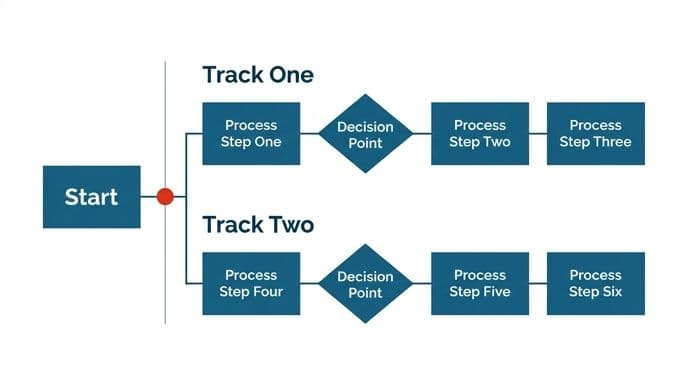
Track one is the native feature your CRM vendor already sells, with per-seat pricing switched on in an afternoon and zero engineering. If it does what you need, use it. We will tell clients this and walk away from the work, because paying us to rebuild a checkbox is a bad trade.
Track two starts where the native feature stops. It kicks in when the AI needs context from systems your CRM doesn't know about, when the output has to follow your approval rules, or when the vendor's per-seat price becomes absurd across a large team. That's when a custom AI API integration layer makes sense, sitting between your CRM and the model, with your own API keys and your own logic for what gets escalated to a human.
Custom AI integration pricing on track two climbs with the number of fields you're writing back to and with how much historical mess sits in the records. Deduplicating a decade of contact records is its own line item. Ask for it to be quoted separately so you can see what you're paying for.
Why AI API integration cost grows with your user count
Most software gets cheaper per user as you grow. AI features do the opposite, and this is the single most underestimated part of any budget.
Every answer costs tokens. Double the users, double the answers, double the inference bill. There's no economy of scale in the model call itself, which makes AI one of the few technologies where success raises your unit costs instead of lowering them. A pilot that costs little across twenty internal users can look very different across two thousand customers doing the same thing all day.
General-purpose frontier models carry a per-token price that sounds trivial until you multiply it by a support queue. The useful counter-move, one we've watched vertical teams adopt through 2026, is distillation. That means taking a narrow, repetitive task and running it on a smaller model on a lean inference server, since the small model only has to be good at one job.
Voice is worth pricing separately, since per-minute costs behave very differently from per-token ones once call volume climbs.
Before signing, model your AI API integration cost at ten times current volume. If the number stops making sense there, change the architecture now rather than after launch.
When automation is cheaper than hiring, and when it isn't
The honest threshold is simpler than most ROI calculators make it. Automation pays when the task is high-volume, rule-shaped, and the same every time, but it doesn't pay when the task is rare, judgment-heavy, or changes shape every quarter.
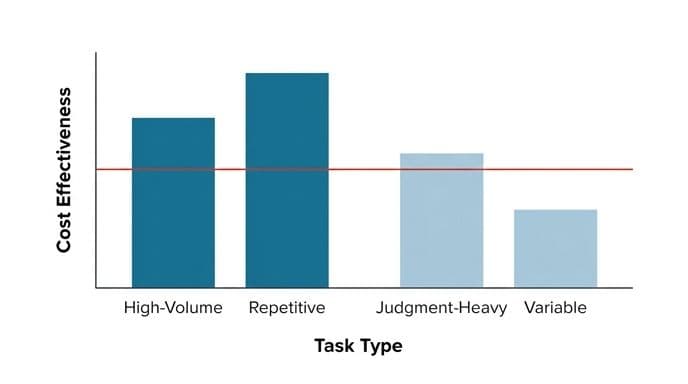
If a person spends a few hours a week on something, automating it is a hobby project. If three people spend most of their week retyping between systems, that's a build with a visible payback. Reconciliation across several entities, invoice capture, and support queues answering the same twenty questions all sit firmly in the second group. So does document processing and OCR work, where the input volume is steady and the rules are stable.
Small businesses have a specific version of this problem, and it's a pricing gap more than a technology one. The market currently offers a rough choice between a DIY build, absorbed as unpaid evenings and weekends, or a pricier agency build, with very little in between. Plenty of small teams feel overcharged for agent setup because the middle option barely exists.
Our answer is to scope down rather than quote up. We automate the single worst workflow first, at a fixed price, and leave the rest alone until it earns its turn.
Where the payback actually shows up
Budgets are rising across the board this year without returns rising to match, and the pattern behind that is usually scope. Organizations buy AI as a general capability, then look for places to put it. The projects that return something start from a named, measured business problem instead.
A content team of 150 writers we worked with cut a production cycle from a month to a week.
The win wasn't a clever model. It was removing the handoffs where work sat in a queue waiting for someone to notice it. Japan Pro publishes listings in twelve languages, which would be a translation department under the old approach and is now a pipeline step. On our ABDM health platform integration with India's national system, the value was in the compliance plumbing, not in anything the end user would call AI.
The pattern across all three: the measurable gain came from eliminating waiting and retyping, not from generating text. Workflow automation across the steps your team repeats daily tends to return more per dollar than a chatbot does, because you can count the hours it removes.
AI integration pricing models and how they change your real total
How you pay changes what you pay, more than most buyers expect.
Fixed price. You know the number before work begins. The vendor absorbs estimation risk, so scoping is rigorous and change requests are explicit. This is how we work, and it suits defined integrations where the outcome is clear.
Time and materials. Flexible, reasonable for genuinely exploratory work, and prone to drift. If you choose it, cap it per phase and require a written stop point.
Per-seat or per-usage SaaS. Low entry cost, low control. Your AI integration pricing then tracks headcount growth rather than value delivered, and you don't own the keys.
Retainer. Sensible after launch for maintenance. Questionable as a delivery model, since there's no incentive to finish.
The question that cuts through all four: who owns the code, the cloud accounts, and the API keys at the end. If the answer isn't you, the quoted price isn't the real price, because leaving costs extra. We hand over everything, which also means a client can fire us without losing their system. Comparing how different AI software integration companies structure their engagements is worth an afternoon before you commit.
Hidden costs: dependency creep, contracts, and agent liability
Three costs rarely appear in a quote.
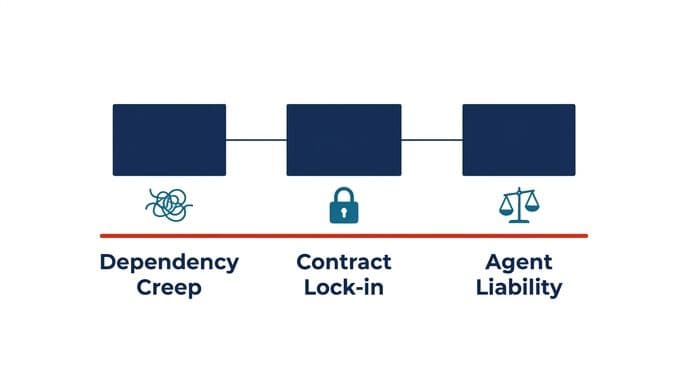
The first is dependency creep. Every framework, vector database, and orchestration library added during the build becomes something to update. Models get deprecated on the provider's schedule, not yours, and a prompt tuned for one version can behave differently on the next. Budget for a maintenance pass a few times a year, or you'll pay for an emergency one.
The second is contractual. Agentic systems that take actions rather than suggest them raise questions most service agreements don't cover, including who is liable when an agent sends the wrong invoice. What the vendor's data retention actually is, and whether model providers train on your inputs, also needs answering. On enterprise endpoints with retention switched off, they don't, but that has to be written down and configured, not assumed. If your data genuinely cannot leave your infrastructure, private LLM fine-tuning and secure hosting removes the question rather than answering it.
The third is the cost of an agent given too much autonomy too early. Approval gates feel like friction during a demo and look like good sense the first time an agent misreads a customer request. We build them in from the start.
Cost per outcome: routing tasks to the cheapest model that works
Stop measuring cost per token and start measuring cost per resolved ticket, per processed invoice, per reconciled statement. That single change in accounting makes optimization obvious.
Once you have per-outcome numbers, routing follows naturally. Classification, extraction, and short structured answers go to small, cheap models, while only genuinely hard reasoning goes to the expensive one. Cache anything asked repeatedly, because paying twice for the same answer is the most common waste in production systems.
Put a cost tag on each workflow from day one. Teams that discover their spend by reading an invoice three months in have already built the expensive version of their system, and unpicking it costs more than designing it right would have.
Pilot to production: what blows the enterprise AI integration budget
Pilots succeed on clean data, patient users, and low volume. Production has none of those. The overruns we see come from a short list of predictable causes.
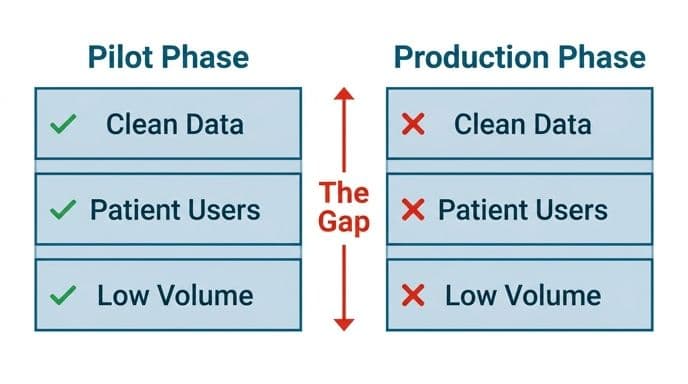
Edge cases are the first. A pilot handles the common path, but production meets the supplier whose invoice has two currencies on it, and handling those exceptions is often more work than the original build.
Volume is the second, for the reasons above. The third is scope spread. Once one team sees it working, four more want it, and an enterprise AI integration budget set for one department gets stretched across five without being resized.
The fourth is skipping the security and compliance architecture until after the pilot proves out. Retrofitting access control, audit logging, and data residency into a working system costs considerably more than designing with secure AI and compliance architecture from the start. We can build to a standard, but submission and approval decisions stay with you.
How to put a number on it before you call a vendor
Write down the one workflow that costs you the most hours this month. Count the people, the hours, and the systems involved. Estimate the volume you'd run through it a year from now, not today. That page is worth more in a vendor conversation than any published price range, and it's the fastest way to see whether the cost to integrate AI into software you already run is justified at all. Sometimes it isn't, and we'll say so.
If you want a second opinion on the number, book a free automation audit and we'll look at the workflow with you. You can also see how we work before committing to anything, or read more about putting AI into the systems your team already uses. Eighteen years, 150 people, 1000+ clients across 50+ countries, and a fixed price named before anyone writes code.
Frequently Asked Questions
What are the main factors that determine AI integration cost?
The three main factors are: how many systems the AI has to touch, how severe the consequences are if it gets something wrong, and how much of your existing data needs cleaning before any model can use it. More specifically, data readiness, number of integration points, write access, compliance surface, and volume and latency are the primary cost drivers.
Why does AI integration cost increase when you have more users?
Every answer the AI generates costs tokens, so doubling your users doubles the inference bill. This makes AI one of the few technologies where success raises your unit costs instead of lowering them, which is why scaling a pilot to thousands of users can look very different from the initial budget.
When does automation make financial sense compared to hiring?
Automation pays when the task is high-volume, rule-shaped, and the same every time. It doesn't make sense for rare tasks, judgment-heavy work, or tasks that change shape frequently. If three people spend most of their week retyping between systems, that's a build with visible payback, but if one person spends a few hours a week on something, automating it is a hobby project.
What's the difference between building a Perplexity-style AI app versus a retrieval assistant over your own documents?
A Perplexity-style product is search infrastructure with a chat interface that requires crawling, indexing, ranking, and caching across the web—a funded-company problem. A retrieval assistant that answers from your own documents using RAG is a weeks-long build for a project budget, not a years-long one.
What hidden costs are rarely included in AI integration quotes?
The article identifies three hidden costs: dependency creep, contracts, and agent liability. These rarely appear in vendor quotes but can significantly affect your total cost of ownership, particularly if you don't own the code, cloud accounts, and API keys at the end of the project.
Wondering what this would take against your own systems?
The audit costs nothing, and you keep the costed plan and the risks whether you go ahead or not.
Book a free automation auditCommon questions
What are the main factors that determine AI integration cost?
The three main factors are: how many systems the AI has to touch, how severe the consequences are if it gets something wrong, and how much of your existing data needs cleaning before any model can use it. More specifically, data readiness, number of integration points, write access, compliance surface, and volume and latency are the primary cost drivers.
Why does AI integration cost increase when you have more users?
Every answer the AI generates costs tokens, so doubling your users doubles the inference bill. This makes AI one of the few technologies where success raises your unit costs instead of lowering them, which is why scaling a pilot to thousands of users can look very different from the initial budget.
When does automation make financial sense compared to hiring?
Automation pays when the task is high-volume, rule-shaped, and the same every time. It doesn't make sense for rare tasks, judgment-heavy work, or tasks that change shape frequently. If three people spend most of their week retyping between systems, that's a build with visible payback, but if one person spends a few hours a week on something, automating it is a hobby project.
What's the difference between building a Perplexity-style AI app versus a retrieval assistant over your own documents?
A Perplexity-style product is search infrastructure with a chat interface that requires crawling, indexing, ranking, and caching across the web—a funded-company problem. A retrieval assistant that answers from your own documents using RAG is a weeks-long build for a project budget, not a years-long one.
What hidden costs are rarely included in AI integration quotes?
The article identifies three hidden costs: dependency creep, contracts, and agent liability. These rarely appear in vendor quotes but can significantly affect your total cost of ownership, particularly if you don't own the code, cloud accounts, and API keys at the end of the project.
Hitasoft
LinkedInHitasoft has built software since 2008, for companies that mostly do not have an IT department. These pieces are written by the people who do the integrations rather than by anybody in marketing.