
Here is a description of a typical retail app before any of this work starts. Search returns nothing useful unless the shopper types the exact product name. The support inbox is mostly "where is my order." The buying team still forecasts reorders in a spreadsheet that one person maintains, and three vendor proposals sat on the desk. All three promised personalization. All three wanted a discovery phase, and none of them had explained which problem would be fixed first.
That is the usual starting point. The honest answer on AI in retail apps is that the technology is rarely the hard part. Picking one use case, getting your existing operational data into usable shape, and keeping control of the customer relationship are the three things that decide whether the feature survives past launch. This guide compares the routes available to you. It states plainly where we fit and where we don't, and covers the questions that vendor pages tend to skip. If you want the wider view across sectors, our guide to building AI features inside vertical software sets the same questions against healthcare and edtech.
The short answer on AI in retail apps
Three categories are worth your money right now, and they are worth it in a specific order.
Demand and stock work pays back fastest because it runs on data you already have. Transaction history, inventory levels, and supplier lead times are enough to start. The output is a reorder suggestion a buyer approves, not an autonomous purchasing system.
Search and product discovery inside your own app comes second. Shoppers describe what they want in plain language and your catalog has to answer. This is where a meaningful conversion lift usually shows up, because you are fixing a failure that already costs you sales every day.
Support automation comes third, and with conditions. Deflecting repeat questions about orders, returns, and stock availability is real value. Replacing your support team is not the goal, and customers notice when you try.
Everything else, including store-level cameras, dynamic pricing, and generated marketing copy at scale, can wait until one of those three is running and measured. The pattern we see in retail AI app development is that teams who ship one narrow thing in a few weeks go on to ship four more. Teams who start with a platform strategy spend two quarters in discovery and launch nothing.
AI vendor comparison for retail: five routes, honestly compared
Here are the realistic options, with Hitasoft listed first because that is who you are reading.
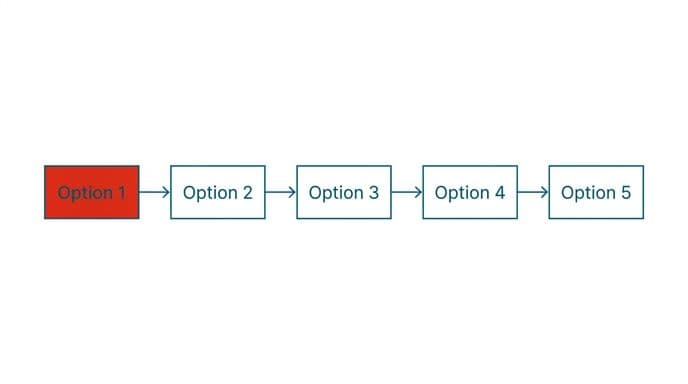
Hitasoft. We put AI into systems you already run rather than replacing them. Fixed price named before work starts, working software in month one, and you own the code, accounts, and keys. We will also tell you when you don't need to build, which costs us work and saves you money. Our weakness is that we are a services team, not a product you can switch on this afternoon.
Your commerce platform's built-in AI. Fastest to turn on, no integration work, and usually decent at recommendations. The limits show up when you want it to respect your margin rules or your warehouse constraints, and you also don't own the model behavior.
Point SaaS tools. A specialist search or chat vendor can beat a generalist. The trade is monthly fees that scale with your traffic and a roadmap you don't control.
In-house build. Right if you already employ data engineers. Hiring for it is slow and expensive, and the first model is the easy part. Maintenance is the real cost.
Large consultancies. They will survive an enterprise procurement process. Timelines stretch, and you often meet account managers rather than the people writing code.
Teams running an honest AI vendor comparison for retail should expect the process to end with a named price and a named first deliverable.
How much data preparation you actually need
It's easy to assume your data disqualifies you from starting. Their product data is inconsistent, their customer records sit in three systems, and nobody has touched the attribute fields since migration. They wait, and the waiting becomes the strategy.
That assumption is wrong in a valuable way. You do not need a consolidated warehouse or a flawless catalog to start. Transaction records, customer profiles, and inventory levels are usually enough foundation for a first model, and they already exist. What you do need is honesty about which fields are reliable. If size and color are clean but material and care instructions are half empty, build the first feature on size and color.
The preparation work that genuinely matters is narrower than people fear. One product identifier that means the same thing in every system. Timestamps in a single time zone. Returns linked back to the original order. Stock counts that reflect what is physically there rather than what the system thinks. Those four jobs take real effort, but they are finite, and your team can scope them in a week.
Where documents are the blockage, supplier invoices and packing slips stuck in PDFs, document processing and OCR work turns that into structured records. We have seen teams discover that the cleanest data they own was sitting in email attachments nobody had parsed.
Choosing the first use case and a realistic timeline
Pick a problem that already has a cost attached to it. Not "we should personalize," but "we wrote off stock in two categories last quarter" or "half of support tickets ask the same thing." The second kind gets approved, measured, and defended at budget time.
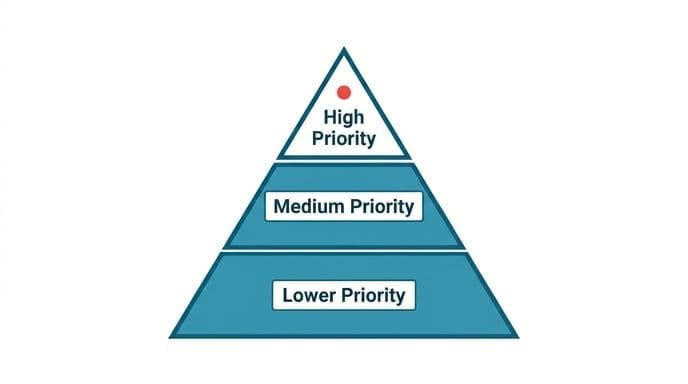
Then check two things. Does the problem have roughly 6 to 12 months of history behind it, and can one person on your team say whether the output is right? If the answer to either is no, choose a different first use case.
Timeline matters more than scope. Something working inside your app in weeks beats something elaborate in quarters, because retail changes seasonally and a model built against last year's assumptions ages badly during the build. Our own pattern is working software in month one, then iteration against real usage. The alternative, a long specification followed by a big reveal, is how teams end up launching features nobody asked for.
One more constraint worth setting early. Decide what the AI is allowed to do on its own. In retail, anything that touches money or a customer gets a person's approval in our builds. A reorder suggestion is approved by a buyer, and a refund decision is approved by an agent. That rule slows nothing down in practice, and it prevents the failure mode that ends projects, which is a confident wrong answer reaching a customer unchecked.
AI inventory automation retail operations can actually run on
Forecasting demos well and disappoints in production for a predictable reason. The demo forecasts a single SKU with clean history. Your reality is seasonal lines, promotions that distort the baseline, suppliers with variable lead times, and a buyer who knows things the data doesn't.
The version of AI inventory automation retail teams keep using tends to look unglamorous. The model proposes reorder quantities with a confidence level and the reasoning visible. The buyer accepts, adjusts, or rejects, and each decision becomes training signal. Over a season the acceptance rate rises and the buyer spends time on the exceptions instead of the whole list.
Good AI stock prediction retail systems also flag what they can't see. A new product with no history should say so rather than guess. A supplier who missed two deliveries should surface in the reorder screen, not in a monthly review. We build this as workflow automation inside the systems you already use, so the buyer stays in the purchasing tool instead of learning a new dashboard.
AI stock prediction retail systems tend to earn trust quickest on slow-moving inventory and markdown timing. Those decisions are currently made on instinct, late, and the cost is visible in the end-of-season write-off. Putting a number against them, with a human making the call, is a smaller promise than full autonomous replenishment and a far easier one to keep.
Retail chatbot and support AI customers don't abandon
Start from an uncomfortable observation. A lot of customers say they would rather speak to a person than a bot, and that preference is not irrational. It comes from years of chat widgets that looped, misread the question, and hid the handoff.
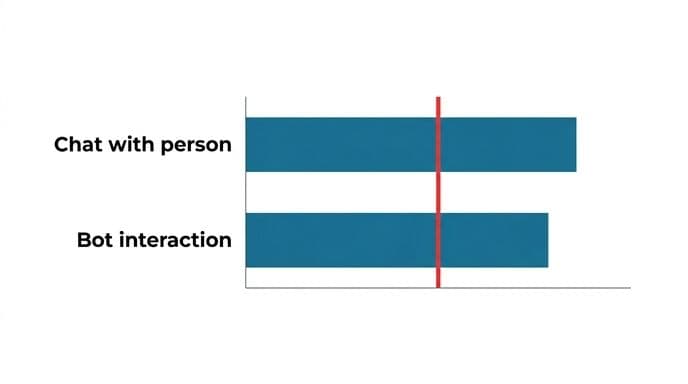
A second observation matters just as much. Buying through a conversational interface currently takes far more typing and far longer than a standard checkout flow with filters and a cart. Conversation is good at narrowing a confusing choice, but it is poor at the mechanical parts of a transaction. So the worthwhile design puts the assistant in front of the decision and the normal interface in front of the purchase. The assistant understands "something waterproof for a toddler, under my usual budget," then drops three products into a conventional product grid with one tap to cart.
Retail chatbot and support AI works best on the questions that repeat forever: order status, return eligibility, stock at a specific store, sizing. Retrieval augmented generation, which means the answer is grounded in your own policy documents and order data rather than the model's general knowledge, keeps responses tied to what your business actually promises.
The handoff rule is simple. One visible route to a human on every screen, no hoops, and the full conversation passed across so the customer never repeats themselves. Teams that build retail chatbot and support AI this way see deflection go up because trust goes up.
Direct app integration versus a presence on AI marketplaces
Shopping assistants built directly into a retailer's own website and app consistently outperform standalone tools sitting outside the brand. The reason is practical rather than philosophical. Inside your app, the assistant sees the live cart, the loyalty balance, the delivery slots, and the customer's order history. Outside it, the assistant sees a product feed and guesses.
Keeping the interaction in your ecosystem also keeps the data, since every clarifying question a shopper asks is merchandising intelligence about what your catalog fails to explain. Hand that to a third-party layer and you have rented the insight back.
That said, ignoring external AI shopping platforms is not a strategy either. Shoppers increasingly start discovery inside assistants, and if your catalog isn't legible there, you are absent from a conversation that ends in a purchase somewhere else. The workable position is both, with different jobs. External presence handles discovery and gets the shopper to you, while your own app handles the relationship, the basket, and the repeat purchase.
Home screen real estate is the metric that connects the two. An app stays installed because it does something the browser and the assistant can't. A reorder list that knows your household, a store-level stock check that is actually accurate, an assistant that remembers the fit problems you had last time. AI features are becoming the reason an app keeps its spot, and novelty features that get opened twice are the reason it loses it.
Making your product data legible to language models
If external assistants are reading your catalog, the readable version has to exist. Most product pages are written for a human skimming and a search crawler, not for a model trying to answer "is this dishwasher safe and does it ship by Friday."
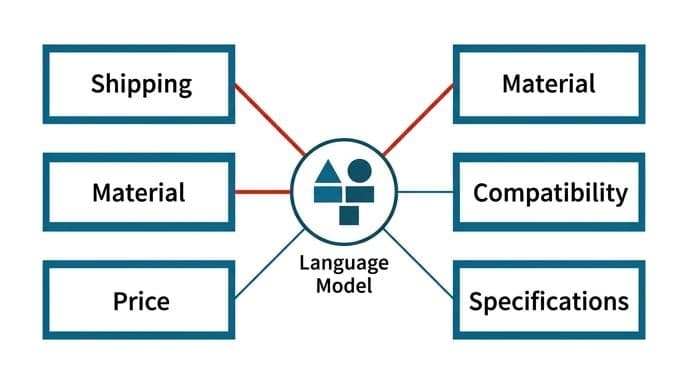
Structured markup is the mechanical half of the job. Product schema with price, availability, condition, shipping, and return window. Review and rating markup where you have it. Clear variant relationships so a model understands that eleven listings are one product in different colors rather than eleven competing products. None of this is new work for a development team, and it is the difference between being quotable and being skipped.
The content half is harder. Attribute fields that say "N/A" teach a model nothing. Descriptions written as marketing copy, full of adjectives and short on specifics, give an assistant nothing to match against a specific question. The products that get recommended are the ones with the plainest facts attached: dimensions, materials, compatibility, what is in the box, what it does not do.
This is also where a pragmatic use of custom AI API integration pays off. Generating first-draft attributes from existing images, spec sheets, and supplier documents fills thousands of empty fields quickly, with a merchandiser reviewing before anything publishes. The review step stays, because wrong specs on a product page cost returns.
Keeping the customer relationship when AI controls discovery
Store owners are right to be uneasy about this. When an assistant mediates product discovery, it can put a cheaper or faster-shipping alternative next to your listing at the exact moment of decision. Customer acquisition cost, average order value, and lifetime value all get harder to steer when the first impression happens somewhere you don't control.
There is no clever fix, but there are defensible positions.
Own the repeat purchase. Discovery can be mediated. Replenishment doesn't have to be. A saved list, accurate delivery slots, and a one-tap reorder keep the second purchase inside your app where no comparison is being offered.
Compete on facts an aggregator can't fake. Real stock at a named store, a return policy that is actually simpler, assembly or fitting included. These survive being compared because they are verifiable.
Treat loyalty data as the asset. Your purchase history is the one input external assistants don't have. A recommendation that knows the customer bought the compatible model two years ago beats a generic match.
Be the cheapest to buy from in effort, not price. Saved payment details, known address, known size. Friction removed is margin kept.
Retail AI app development, done with this in mind, is less about adding a chat window. It is about making the owned channel the easiest place to complete a purchase.
Retail vision AI: what it delivers and where it stalls
Camera-based work sounds like the most sophisticated thing on the list and is often the least ready. Retail vision AI does shelf gap detection, planogram compliance, and queue length well, because those are narrow visual questions with straightforward right answers. It struggles with anything requiring intent, and it carries privacy obligations the other use cases don't.
Three practical constraints come up every time. Camera placement in an existing store is rarely ideal, and reshooting angles costs more than the software. Lighting changes between morning and evening break models trained on one condition. Staff adoption decides everything, because a shelf gap alert nobody acts on is just a log file.
Where retail vision AI genuinely earns its place is self-checkout loss and stock accuracy. Both have a measurable cost, both are currently addressed by spot checks, and both improve when a camera watches continuously and a person reviews flagged events. The review step is not optional. Accusing a customer on a model's say-so is the fastest way to turn a technology project into a legal problem.
If you are running retail vision AI anywhere near customer identity, the deployment question matters more than the model. We build that kind of work under secure AI and compliance architecture, and where footage or customer records can't leave your infrastructure, private model hosting and fine-tuning keeps it inside your own environment.
Build, buy, or start with a custom retail AI MVP
Buy when the problem is generic and your competitive position doesn't depend on doing it differently. Payment fraud scoring, basic recommendations, translation. Paying a specialist is cheaper than owning it, and we will say so.
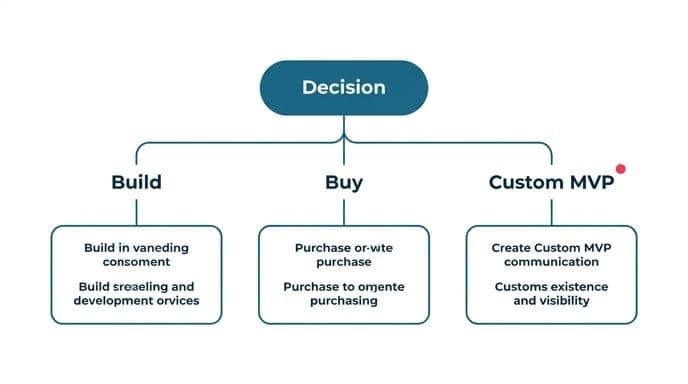
Build when the logic is yours: margin rules, allocation across stores, loyalty tiers, supplier terms. Off-the-shelf tools that nearly fit are the expensive option, because the gap gets filled by staff doing manual work forever and you still pay the subscription.
A custom retail AI MVP is the sensible middle when you don't yet know which it is. Two or three weeks of build against real data answers questions no proposal can. Does the forecast beat the buyer's instinct? Do shoppers use the assistant? Is the data clean enough? We do prototype and MVP work for exactly this, at a price named up front, and several of those prototypes have ended with us recommending the client buy a tool instead.
On the cost question people ask last and worry about most, model spend does scale with usage, and anyone who tells you otherwise is selling something. Caching repeat answers, routing uncomplicated queries to smaller models, and keeping deterministic logic in code rather than in prompts are what keep the bill flat as volume grows. On enterprise endpoints with retention disabled, your data is not used to train the provider's models, and that configuration is something you should verify in writing rather than take on trust. The same discipline applies in other regulated sectors, which is why our comparison of AI options for healthcare teams and our work across healthcare and consulting projects reads so similarly to this one.
Where to start this quarter
Pick the one problem with a number attached to it, and check that you have most of a year of history and one person who can judge the output. Ask every vendor on your list for a fixed price and a named first deliverable, plus written confirmation of who owns the code and the keys at the end. If nobody will give you those three in writing, that is the comparison finished.
We work the way we would want a supplier to work with us. Builders talk to you directly, not account managers. See how we work before you commit to anything, or book a free automation audit and we will tell you honestly whether AI in retail apps is your best next spend. If the answer is yes and you want proof before a full build, start a prototype and judge it against your own data.
Wondering what this would take against your own systems?
The audit costs nothing, and you keep the costed plan and the risks whether you go ahead or not.
Book a free automation auditHitasoft
LinkedInHitasoft has built software since 2008, for companies that mostly do not have an IT department. These pieces are written by the people who do the integrations rather than by anybody in marketing.