
A controller we spoke with last month closed her books across four entities using a spreadsheet that pulled from three bank portals, a payments processor, and an accounting system that none of the others talked to. The close took eleven working days, and nine of those days were spent copying numbers, not deciding anything. When a figure didn't match, she had no way to tell whether the error came from the export, the exchange rate, or the person who typed it in.
That gap between what systems already know and what people retype is the whole problem. Financial data automation for fintech is the work of closing it. It means moving transaction, ledger, and document data between systems without a human acting as the transport layer, while keeping a human on the decisions that matter. Below is what to automate first, where it fails, and when you'd be better off not building anything at all.
What Is Fintech Software, and Where Does Automation Fit Inside It?
Ask five people what is fintech software and you'll get five answers. The category covers everything from a lending decision engine to a budgeting app. A useful working definition is software that moves, records, or decides about money, and carries regulatory consequences when it gets something wrong.
Automation sits underneath most of it. A lending platform needs bank statement data parsed and categorized before any model scores a borrower. A payments company needs settlement files matched against its own ledger daily. A neobank needs transactions enriched and classified before a customer sees anything valuable in their app. In each case the visible product depends on automated finance data arriving clean, on time, and in a shape the next system understands.
The confusion worth clearing up early is fintech vs business analytics. Business analytics looks backward at what happened and helps someone decide what to do next. Fintech software usually has to act, not advise, inside a transaction window measured in seconds. A dashboard that's wrong is embarrassing, but a payment instruction that's wrong moves real money. When people treat the two as the same discipline with different data, they tend to underbuild the controls, because analytics tooling assumes a person reads the output before anything happens.
If the output of your pipeline triggers a payment, a credit decision, or a regulatory filing, it needs validation in code. For anything touching money or a customer, it also needs a person who approves it.
How Is AI Used in Fintech, Honestly?
The short answer to how is AI used in fintech today is extraction, classification, matching, and drafting, not deciding.
Document processing is the clearest win. Bank statements, invoices, remittance advices, and supplier contracts arrive as PDFs and scans. Reading them into structured fields has been manual forever. Automated data extraction for finance now handles the bulk of that reliably, with confidence scores that route anything ambiguous to a reviewer instead of guessing. Our document processing and OCR work is built around that routing rule rather than around raw accuracy claims.
Classification is the second. Mapping a thousand transaction descriptions into business budget categories used to be rules written by hand and patched forever. A model trained on your own historical coding does it better. It also tells you when a transaction doesn't fit any of your existing categories cleanly. That signal is often worth more than the classification itself, because it surfaces new vendor relationships and spending patterns nobody flagged.
Where AI genuinely struggles is financial modeling. It misses the nuances that experienced analysts carry in their heads, like how depreciation schedules change after an acquisition or how integration timing shifts a forecast. These aren't edge cases. They're the parts of a model that determine whether an investment decision is sound. Any answer to how is AI used in fintech that skips this is selling something.
So the honest position is to use AI to read, sort, and match, and keep humans on judgment. The question of whether automation replaces finance roles or creates new ones has a practical answer in most teams we work with: the people stay and the retyping goes.
Cutting Monthly Reporting From Hours to Minutes
Most monthly close time isn't analysis. It's assembly.
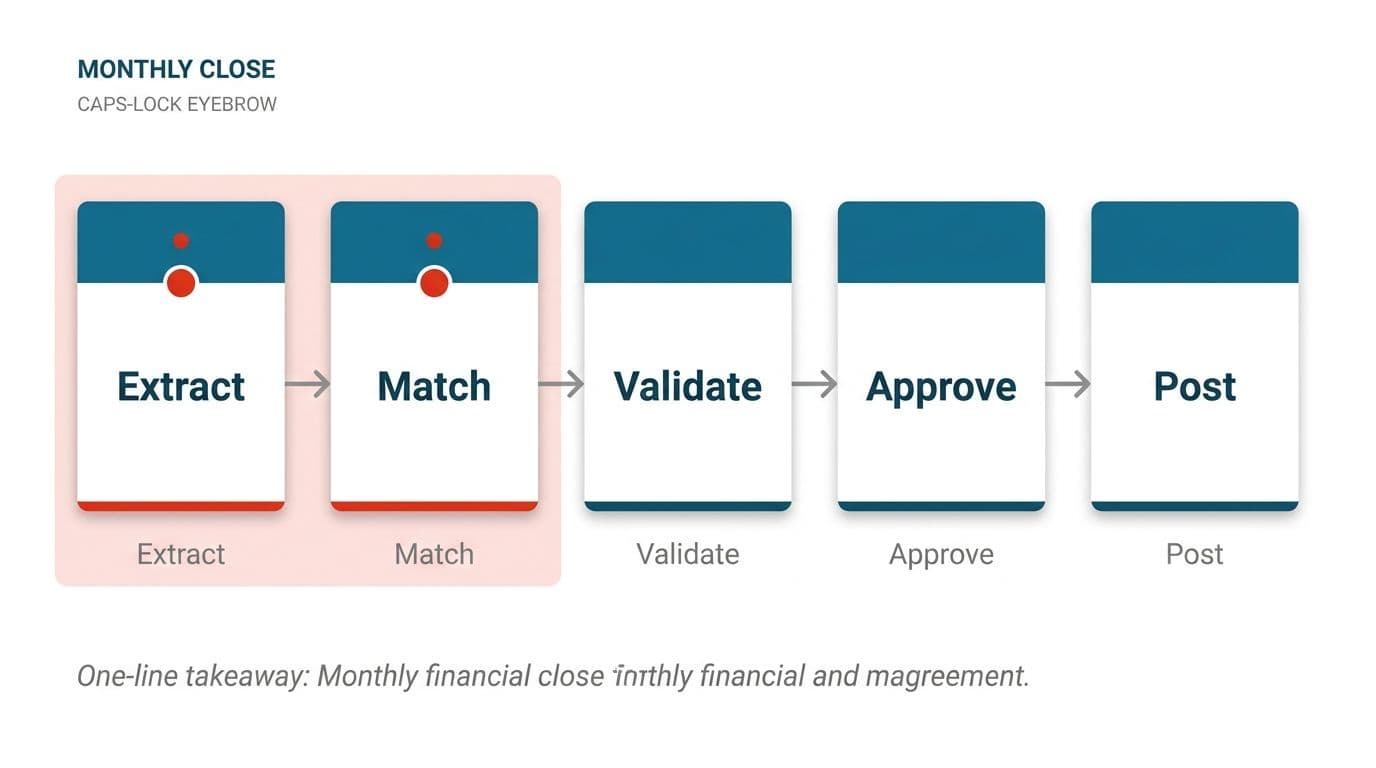
Someone exports a trial balance. Someone else pulls payment processor settlements. A third person downloads bank activity, reconciles it against the ledger, and emails a workbook to whoever builds the board pack. Each handoff adds a day and a chance to introduce an error that nobody catches until the next quarter.
Automated financial data processing collapses that assembly. The exports become scheduled API pulls, and the reconciliation runs continuously instead of monthly. The board pack is generated from the same source the ledger uses, so there's no version question. What's left for the finance lead is reviewing variances and writing commentary, which is the part they were hired for.
The realistic expectation is that the assembly shrinks to minutes, the review stays human, and the first close after go-live takes longer than usual, because you're validating the new path against the old one in parallel. We tell clients to budget for that overlap month rather than pretending it doesn't exist. Teams that skip the parallel run are the ones who find a mapping error in a regulatory filing.
Good data automation for finance teams also changes what gets reported. When pulling a number costs nothing, you can report weekly instead of monthly, and you start seeing cash problems while there's still time to act.
Multi-Source Aggregation Without the Excel Middleman
The Excel middleman is a person whose actual job title is something else. They maintain the workbook that glues five systems together, and when they're on leave, the close stops.
Replacing them means building aggregation properly. Each source gets a connector, a schema, and a normalization step that turns its idiosyncratic output into your canonical format. Currencies get converted at a stated rate with the rate stored, dates get normalized to one timezone, and entity codes get mapped once, in one place, rather than in forty VLOOKUPs.
This is where the real cost of data integration shows up, and where most estimates go wrong. The connector is cheap. The normalization is not, because every source has its own version of truth about what a transaction is. One system records a refund as a negative sale. Another records it as a separate transaction type. Reconciling that semantic difference is design work, not plumbing.
We price the normalization explicitly rather than burying it. That's the line item that doubles on projects where nobody looked at the actual data first. Fixed price, named before work starts, which means we do that look first.
Automated financial data solutions that skip normalization produce aggregated garbage faster than a human could. That's worse than the spreadsheet, because the spreadsheet had someone watching it.
Building the Pipeline: Connectors, APIs, and Scheduling
A working pipeline has four stages: ingest, normalize, validate, and load. Each one needs to be independently retryable, because something will fail at three in the morning and you need the fix to be a rerun, not an archaeology project.
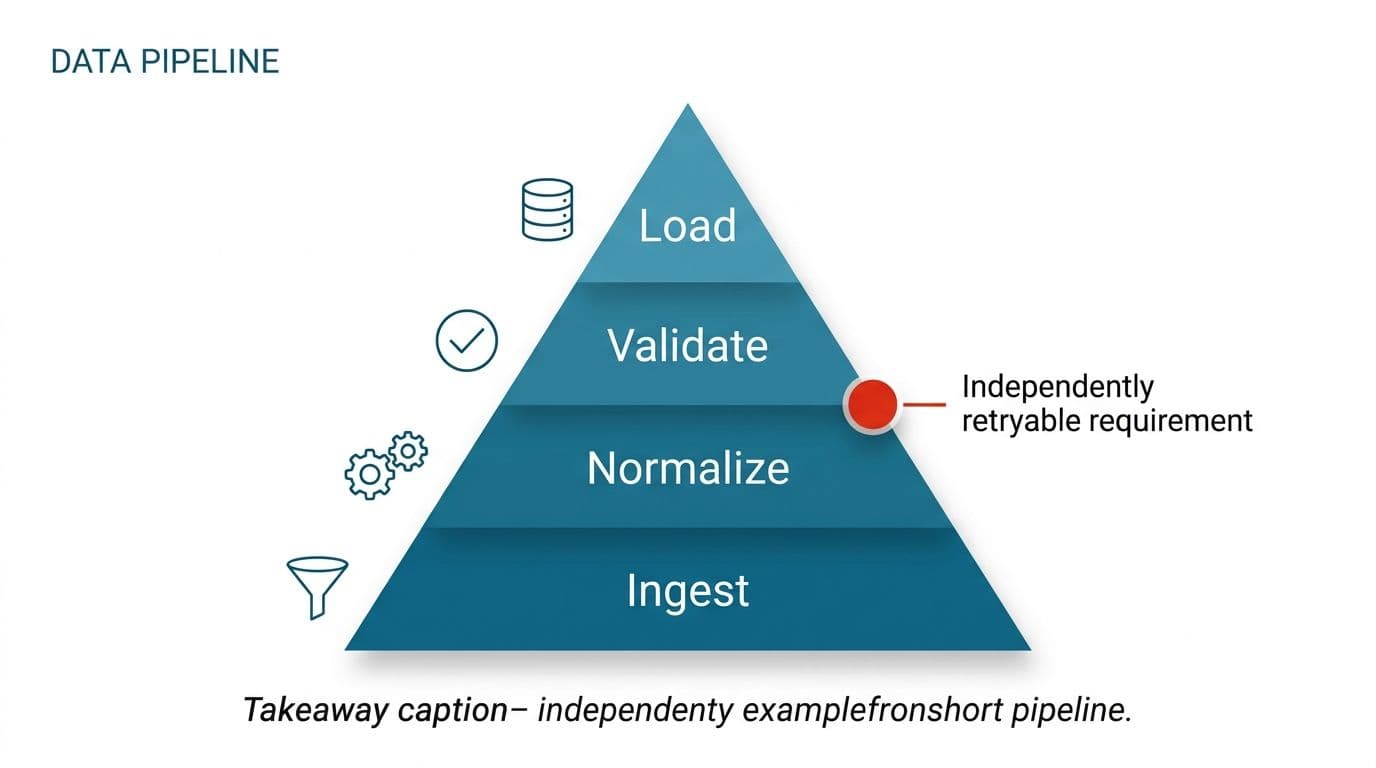
Ingest means connectors to banks, processors, accounting platforms, and internal databases. Plenty of these are solved. Reliable integration with accounting software like Xero is table stakes now, and the better tools handle diverse business scenarios through customizable workflows rather than forcing your process to match theirs. If an off-the-shelf connector covers your source, use it. We'll tell you when you don't need us to build one.
Validate is the stage teams underbuild. Every record should pass checks before it loads: does the batch total match the control total, are there duplicate IDs, do the dates fall inside the expected window, and does the sum of lines equal the header amount. Failures route to a queue, not to silence.
Data pipeline automation banks run at a different scale, and the constraints shift accordingly. Settlement windows are fixed, regulators ask for lineage on every field, and reprocessing a day costs real money. Banks are actively adopting automation and data strategies to cut infrastructure cost, which is exactly why the discipline around this kind of pipeline work matters more, not less. Cheaper infrastructure with weaker controls is a bad trade.
Automating IT workflows for financial transaction systems extends this past the data itself. Deployment, key rotation, access reviews, and incident alerting all belong in the same automated path, because a pipeline nobody can safely change is a pipeline that gets stale. Our AI workflow automation service treats the operational workflow and the data workflow as one build.
Reconciliation Across Systems That Don't Agree
Reconciliation breaks because two systems describe the same event differently. Your ledger says one invoice. The bank says three partial payments across two weeks, one of them netted against a fee, and nothing matches on amount, date, or reference.
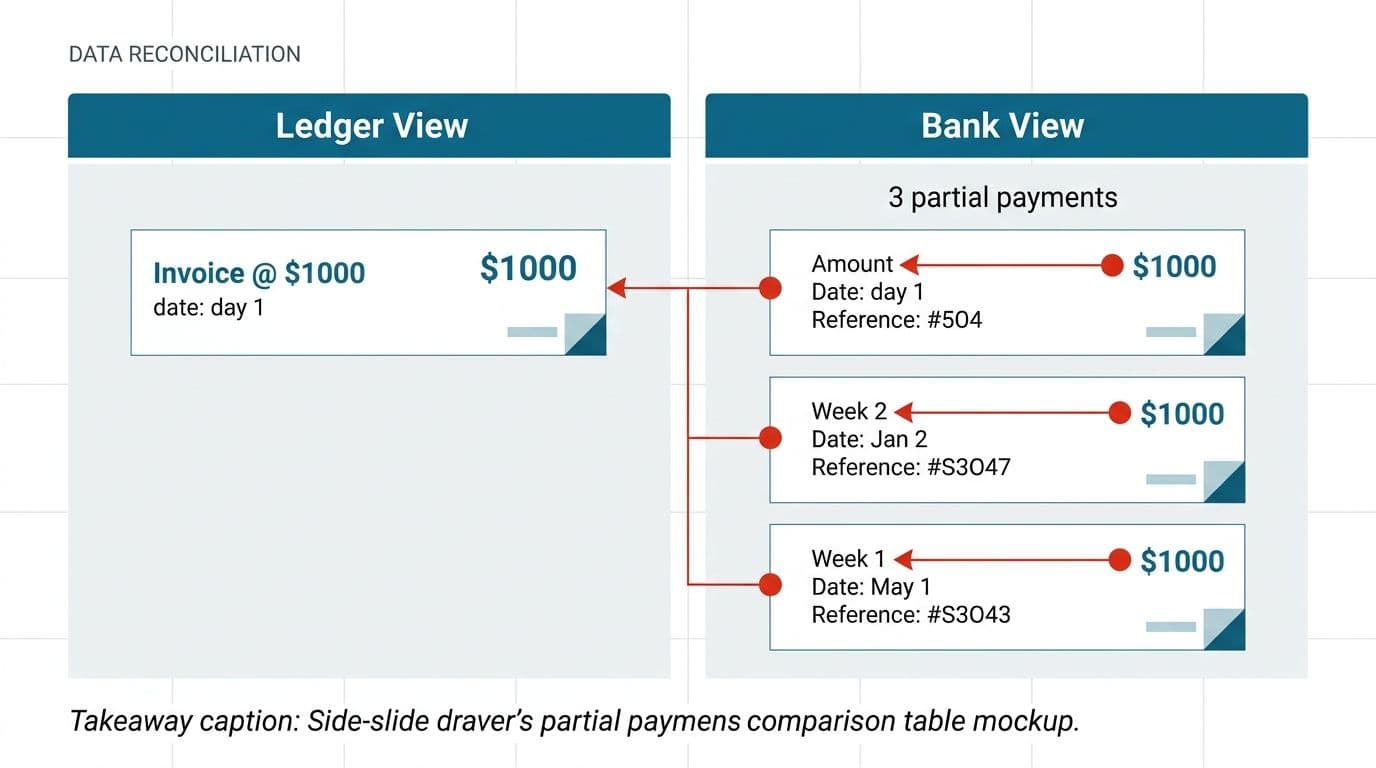
The fix is matching in tiers. Tier one is exact: reference plus amount plus date. That clears most volume. Tier two is fuzzy, with amount within tolerance, date within a window, and reference partially matched after stripping prefixes. Tier three is grouped, where several payments sum to one invoice or one payment covers multiple. Everything that survives all three goes to a human with the candidates ranked, not to a blank screen.
High volume transaction matching lives or dies on tier two tuning. Too tight and your exception queue swamps the team. Too loose and you create false matches, which are far worse because nobody investigates a matched item. We tune tolerances against historical data and show the false-match rate at each setting before anything goes live.
Cash application metrics tell you whether it's working. Track the share of receipts matched without human touch, the age of your unapplied cash, and the time from receipt to application. Those three move together, and when they stop moving together, something upstream changed.
Cloud ACH automation for financial services adds its own wrinkle. Returns and reversals arrive days after the original, with their own codes, and they have to find their way back to the original transaction. Building it without a plan for late-arriving returns produces a ledger that looks clean until month three. Structured finance data automation, where instruments have waterfalls and tranches, pushes this further again. A single payment may need splitting across numerous obligations with their own priority rules.
Freshness, Accuracy, and the Retrieval Contract
Freshness is a design decision, not a property of your tooling. Decide it in writing before you pick anything.
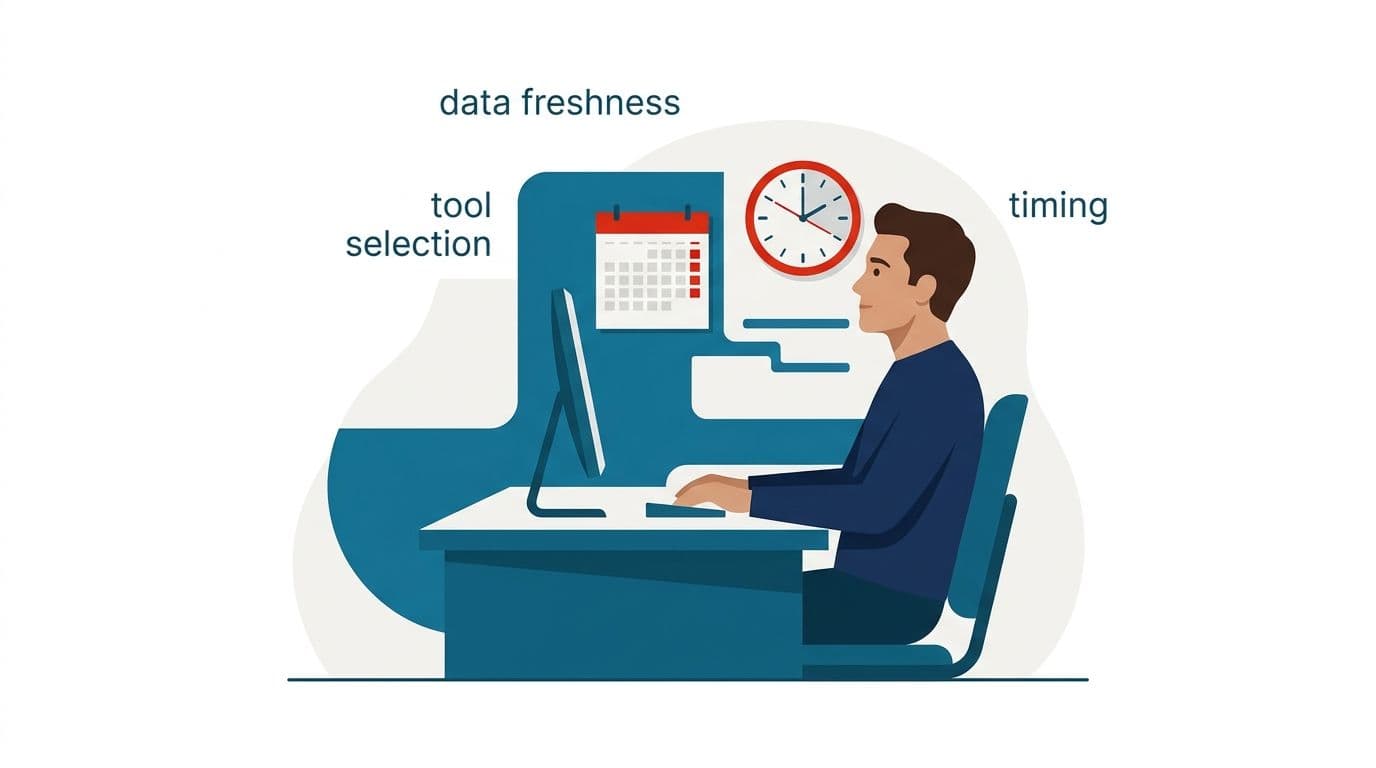
Write down the retrieval contract first: what an answer is allowed to cite, what it must never cite, and a freshness rule you can test. Something like indexing within five minutes of an amended filing, rather than a vague commitment to keeping data current. A rule you can write a test against is a rule you can hold a vendor to, including us.
For systems where a model answers questions over financial documents, the rebuild problem bites quickly. Re-embedding every document after each filing amendment is slow and expensive. The approach that holds up is to work at the level of the retrieval unit rather than the source file, and to hash the normalized unit so that retries don't create duplicate logical copies. As long as the collection treats the unit ID as the stable key, you get a cheap guardrail against duplication and you only re-embed what actually changed.
This is the part of vector database engineering services that gets skipped in demos, because demos don't have amendments. Financial data intelligence automation over a corpus that changes daily needs a deliberate answer to staleness. Users will otherwise quietly stop trusting it after the first time it cites a superseded filing.
Accuracy needs the same treatment. Every automated finance data path should carry a confidence signal and a defined threshold below which a person reviews it. We don't claim error-free output, and you should be skeptical of anyone who does. What we do build is a path where errors surface in a queue rather than in a filing.
FP&A Tools vs Building In-House
Buy when your process is ordinary and your volume is moderate. Platforms like the ones that anchor accounting firm tech stacks handle approval workflows that scale from simple to complex, and they're genuinely good at the common path. Payment automation tools cut manual workload substantially for teams whose payment flows look like everyone else's.
Build when the thing that makes your product work is the thing the tool won't do. If your matching logic is a competitive advantage, or your entity structure doesn't fit anyone's data model, a vendor configuration screen becomes a ceiling you hit in month four.
The same goes for any compliance regime that requires data to stay inside your own infrastructure.
The middle path works more often than either camp admits. Buy the connectors and the approval workflow. Build the normalization and matching layer that's specific to you. That keeps the cost of data integration proportionate to the value, and it means you own the code, accounts, and keys for the part that matters.
The test we use with clients is uncomplicated: if you can describe your requirement to a vendor's sales engineer and they nod, buy. If they start saying "we could look at a custom field for that," you're already building, just with someone else's constraints.
The market keeps moving toward more specialized tools and fewer suites. That's good for buyers, as long as you plan the integration between them.
Security and Compliance When the Data Is Sensitive
The question we get most often is whether AI vendors train on client data. On enterprise endpoints with retention switched off, no. That's a configuration you can verify in the contract and in the API settings, and we show clients both.
For data that genuinely cannot leave your control, the answer isn't a stronger promise from a vendor. It's a private deployment. Private LLM fine-tuning and secure hosting puts the model inside your perimeter, which changes the compliance conversation from trust to architecture. The cost is higher and the capability ceiling is lower than frontier hosted models, but for regulated workloads that trade is usually worth making.
Beyond the model, the controls that matter in automated financial data processing are unglamorous: field-level encryption on anything identifying, immutable audit logs for every transformation so you can show a regulator how a number got from source to filing, least-privilege service accounts with rotation, and human approval gates on anything that moves money or contacts a customer, enforced in code rather than in policy.
We can't guarantee regulatory or app store approval. Submission and the decision stay with you. What we can do is build the compliance architecture so the evidence exists when someone asks for it, rather than being assembled under deadline.
One cost question worth answering plainly: model spend does grow with usage, but most of a well-built finance pipeline is deterministic code, not model calls. We size the model-dependent portion at design time so you know which parts of the bill scale with volume.
Where to Start
Pick the single process your team hates most and time it honestly for two weeks. That's your baseline. Then automate the extraction and matching for that one process only, run it in parallel with the manual path for a full cycle, and compare. If it holds, extend it. If it doesn't, you've lost a month instead of a year.
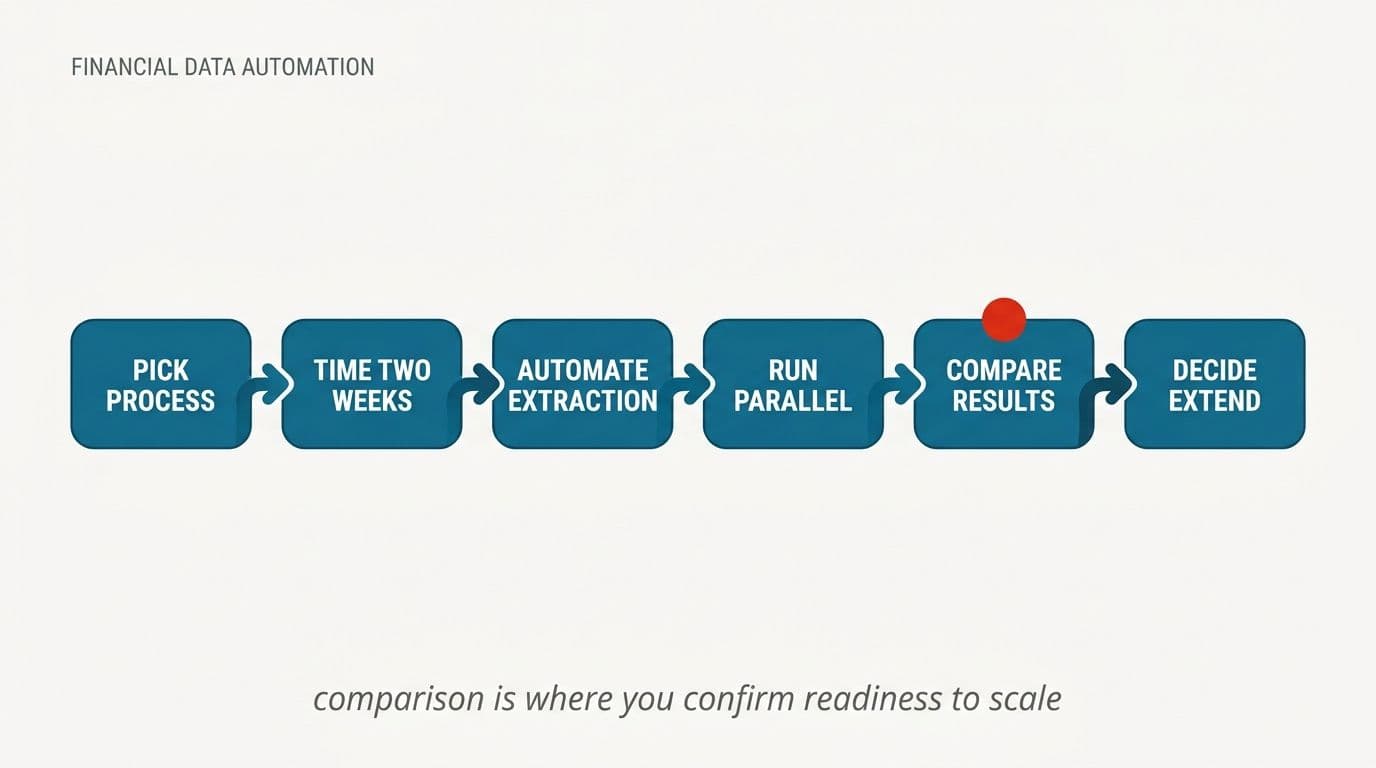
The sequence that works is to automate data extraction for finance documents first, then matching, then reporting, then anything predictive. Teams that start with the predictive layer end up with a model trained on data their pipeline can't reliably supply.
Our experience across many clients and countries has taught us that the biggest wins in financial data automation for fintech are boring: fewer handoffs, cleaner mappings, exceptions that reach a person while there's still time to fix them. If you want to see what that looks like in your own stack, book a free automation audit and we'll tell you what's worth building and what isn't. You can also read more about our work across fintech and finance systems or see how we work before you commit to anything.
Wondering what this would take against your own systems?
The audit costs nothing, and you keep the costed plan and the risks whether you go ahead or not.
Book a free automation auditHitasoft
LinkedInHitasoft has built software since 2008, for companies that mostly do not have an IT department. These pieces are written by the people who do the integrations rather than by anybody in marketing.