
A controller at a lending startup once described her month-end this way: four people, three days, one shared spreadsheet. A stack of PDF bank statements that nobody trusted until they'd been retyped twice. The systems already held most of that data. The problem was that none of them would hand it over in a usable shape. Humans became the integration layer.
That's the gap fintech document automation fills. It reads the documents your business already receives, pulls out the fields that matter, and checks them against the records you already hold. Anything uncertain gets routed to a person who can decide. Not a replacement for your finance team. A replacement for the retyping.
Fintech Document Automation: What It Is and How It Works
Strip away the marketing and there are four jobs happening in sequence.
Capture. A document arrives. Email attachment, supplier portal, scanned paper, bank export, API payload. The system ingests it and works out what it is.
Extraction. Optical character recognition and layout models pull structured fields out of unstructured pages. Invoice number, supplier, line items, tax, dates, account references. Modern extraction handles variable layouts, which matters because your 400 suppliers do not use the same invoice template.
Validation. Extracted values get checked against something trustworthy, such as purchase orders, contract terms, vendor master data, and prior payments.
Routing and action. Clean documents post straight through. Anything that fails a check goes to a named person with the exception flagged, not dumped into a review queue of 300 items.
The hard part has shifted from "can a machine read this" to "who owns the output when it's wrong." One honest caveat: extraction accuracy is never absolute, and anyone promising error-free ledgers is selling something. Our rule at Hitasoft is that output gets validated either in code or by a person before it touches money.
Moving from task-level automation to process-level automation
Most teams start by automating one task. The task gets faster, everyone's pleased, then nothing much changes at the business level.
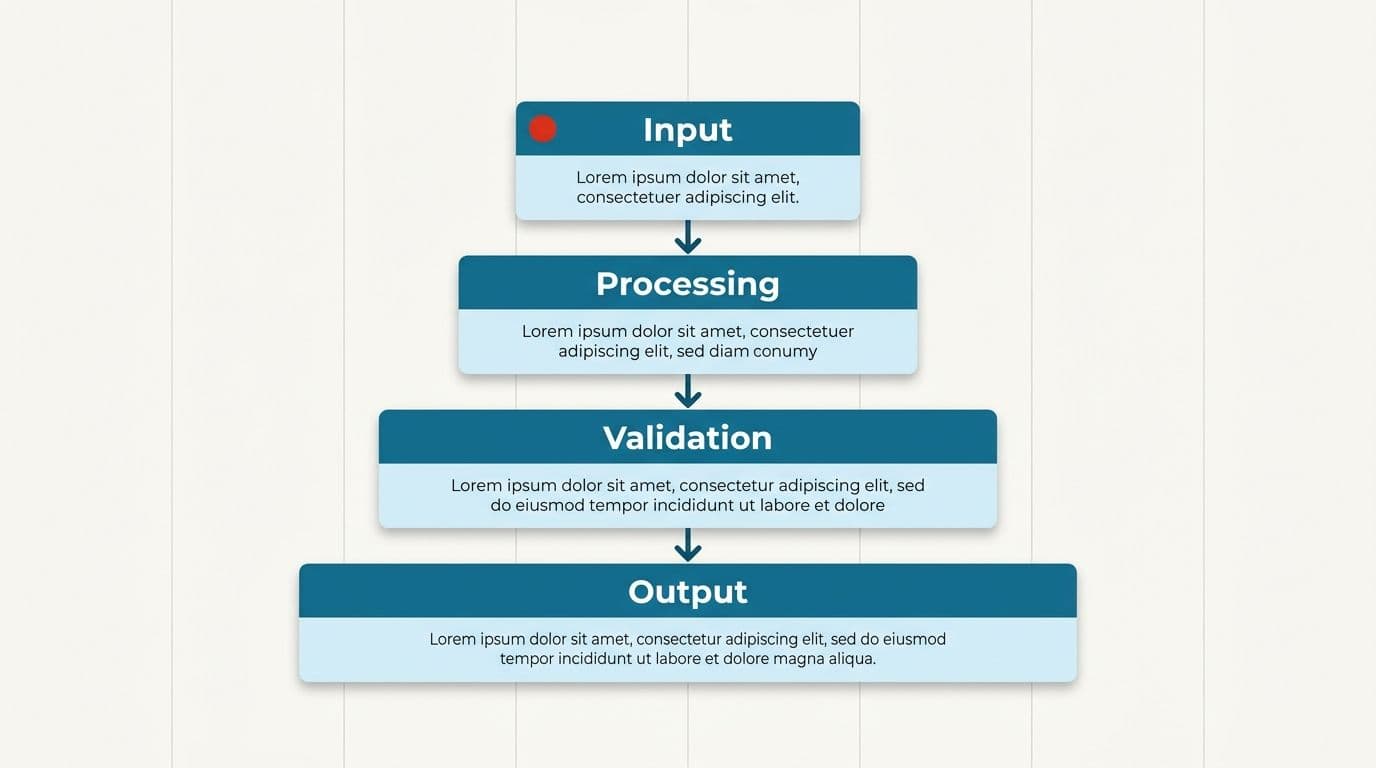
The reason is that the task was never the bottleneck. A three-day close doesn't become a one-day close because invoice entry got quicker.
Process-level automation means the whole chain runs on its own and surfaces only the exceptions. One flow, one audit trail, one place to look when something stalls. The move from task to process is mostly an organizational problem rather than a technical one. Process automation needs four teams to agree on who owns the data, what the approval thresholds are, and what happens at the seams. That agreement work takes longer than the build, and teams consistently underestimate it.
A good first step is mapping where a single document physically stops. Not where it's processed, where it waits. Those waiting points are the process, and they're usually the thing worth automating first.
End-to-end orchestration across departments and systems
Your documents don't respect your org chart. A signed contract matters to sales, legal, finance, and compliance, and each of them keeps their own copy in their own system with their own filing logic.
Orchestration is the layer that moves work between those systems without a human carrying it. In practice it means a few specific things:
- A single event stream. When a document changes state, every system that cares finds out. No nightly batch, no "did you get my email."
- One source of truth per field. Vendor banking details live in exactly one place. Everything else reads from it. This kills a whole class of fraud and a whole class of reconciliation pain.
- Shared exception handling. When extraction is uncertain or a match fails, the same escalation path applies whether the document came through AP, AR, or onboarding.
- Consistent identity. The same supplier, customer, or entity resolves to the same record across every system, even when the name is spelled four ways.
That last point breaks more implementations than anything else, and it breaks hardest outside English-speaking markets. The same applies across the Middle East and parts of Asia. If you operate in more than one region, test normalization with real local records before you commit, not with the vendor's demo set.
Some banks appear to be pushing in a related direction, combining automation with data partnerships and data monetization in an effort to hold down infrastructure costs while keeping operations running. The lesson for smaller fintechs isn't to sell data. It's that orchestration makes your data coherent enough to be useful to someone else, and coherence is what makes data partnerships viable in the first place.
Automating accounts payable and accounts receivable
Accounts payable is the usual starting point because the documents are high volume and the failure mode is visible. A missed invoice becomes an angry supplier.
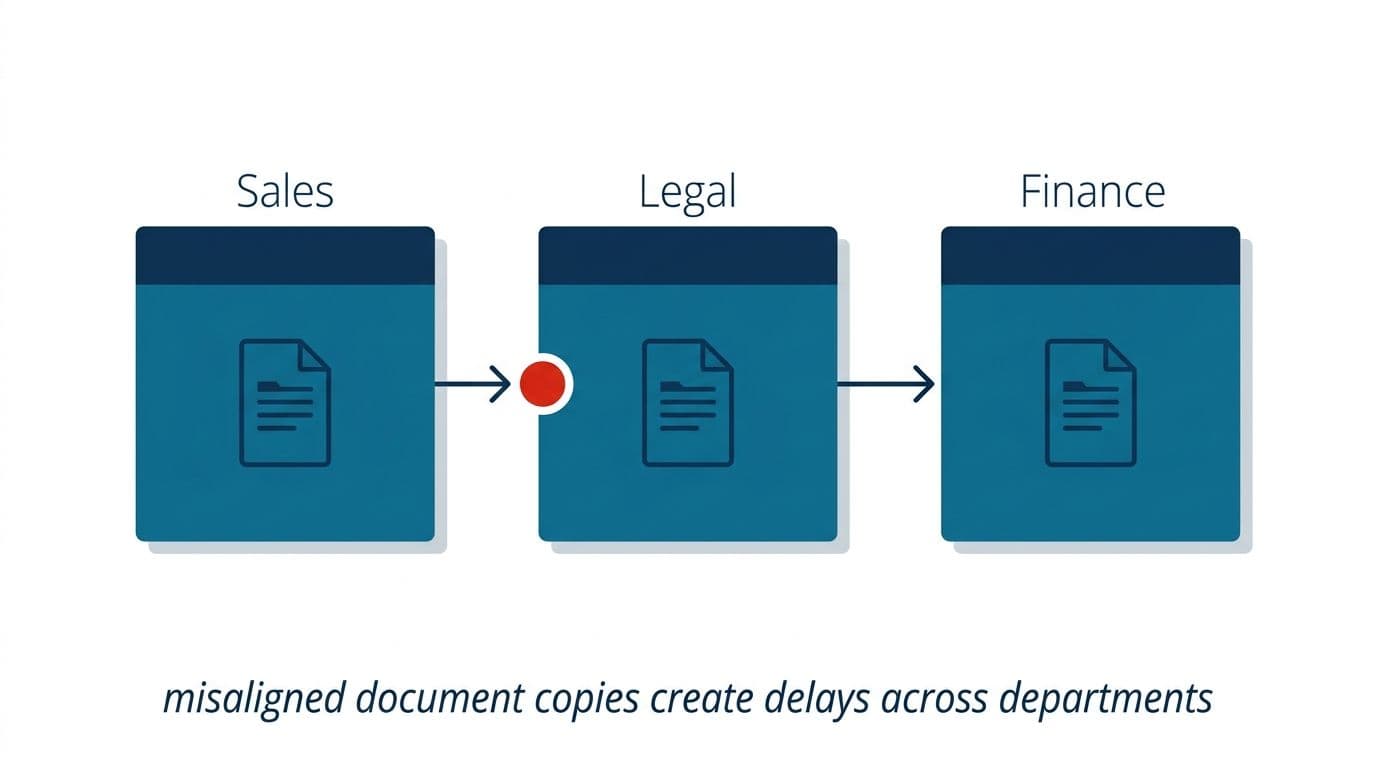
The AP flow worth building is capture to match to approve to pay to reconcile. Use three-way matching against purchase orders and goods receipts where you have them, and tolerance rules where you don't. Approval routing should follow your delegation of authority rather than a generic hierarchy, and it should work on a phone. Approval bottlenecks are overwhelmingly a mobility problem, since the approver is in a meeting, on a site visit, or in another time zone, and the invoice sits until Thursday.
Accounts receivable gets less attention and often pays back faster. Automated invoice generation from contract terms, dunning sequences that escalate on a schedule rather than when someone remembers. Cash application that matches incoming payments to open invoices, and remittance advice parsing that handles the PDF a customer's AP system emails you. Cash application is where the manual hours hide.
For organizations running an ERP for nonprofits, AR automation carries an extra layer. Restricted fund tracking means a single receipt may need splitting across grant codes, and the documentation trail has to survive an audit years later. Generic AP tooling rarely handles fund accounting, which is why nonprofit finance teams end up with workarounds that quietly break at scale.
Whatever you automate first, instrument it. Log the exception rate, the touch rate, and the time from document arrival to posting. Without those numbers you're guessing about whether the next phase is worth funding.
Reconciliation tools: how to evaluate them and what returns to expect
Reconciliation is the most-promised and least-delivered area in finance automation. Every vendor demos a clean match rate on clean data.
Evaluate on messy data instead. Ask for a trial with your own worst month: multi-entity, multi-currency, a few intercompany transfers, and a payment processor settlement file. Then check four things:
- Match rate on first pass, before anyone tunes rules.
- How unmatched items are presented. A list is useless. A grouped set of probable causes is workable.
- How rules are maintained. If every new scenario needs a vendor ticket, your cost grows with your complexity.
- Audit trail depth. Can you reconstruct why a match was made, eighteen months later, for a regulator?
On return, be realistic. The saving is rarely headcount, at least not immediately. It's the compression of the close, the reduction in late-discovered errors, and the removal of the overtime spike that makes good finance people leave. Those are genuine, but they show up as capacity rather than cost reduction. Present them that way internally or you'll be held to a number you can't hit.
How to evaluate the fintech company ApprovalMax on expense approvals
Readers ask about specific tools, so here's a practical frame. There are three questions worth asking, and the same three apply to any approval tool.
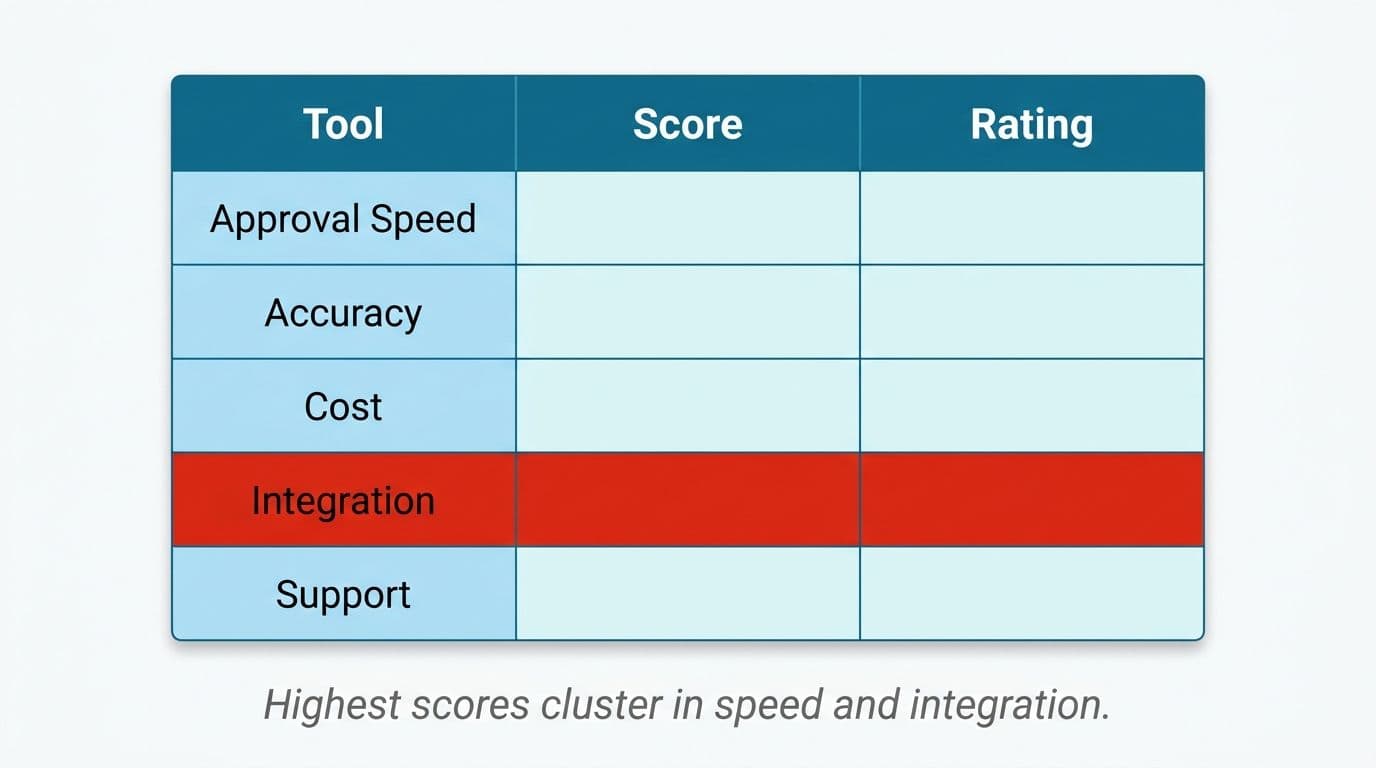
First, does the approval logic match how your organization actually makes decisions? If your approval rules are simple, that flexibility is overhead you're paying for. If they're genuinely conditional, it's the point.
Second, does it remove the bottleneck or relocate it? Mobile approval is the differentiator here.
Third, how deeply does it integrate with your ledger? The reliable Xero connection is a large part of why teams find it uncomplicated to set up, and that reliability is specific to the integrations it was built for. Outside those, your mileage varies.
Regulatory accountability and why a human still approves
Automation does not transfer accountability. If an automated system approves a payment to a fraudulent account, the regulator asks your compliance officer, not your vendor.
This creates a gap that a lot of implementations ignore. The machine makes the decision, but no named person owns it, and the audit trail records a system action with no human behind it. That's a finding waiting to happen.
Our position is easy and we hold it on every fintech build. A person approves anything touching money or a customer. Not every transaction, but every category of decision, with thresholds and sampling that a regulator can understand. The automation does the reading, matching, and preparing. The judgment stays assigned.
KYC and onboarding show this clearly. Automated identity verification has reshaped fintech compliance, handling document checks, liveness, and sanctions screening at a speed no manual team matches.
Build the accountability map before the workflow. For each automated decision, write down who owns the outcome, what evidence they'd need to defend it, and what threshold sends it to review. If you can't fill in all three columns, that decision isn't ready to automate.
Getting past the organizational resistance
Technical failure is rare in these projects. Political failure is common.

The objections arrive in a predictable order. The team that owns the current process worries about relevance. The finance lead who built the spreadsheet system that works doesn't want it replaced by something that might not. IT has a backlog and sees another integration. Somebody raises data residency, usually correctly.
None of these are unreasonable, and arguing them down doesn't work. What works is narrowing the first phase until it's too small to threaten anyone. One document type, one entity, one month, running alongside the existing process rather than replacing it. When the parallel run shows the same numbers, resistance converts to curiosity.
Be straight about job impact, too. If a role genuinely changes, say so early and say what it becomes. Finance people are good at spotting evasion, it's the job. The honest version is usually that the work shifts from processing to exception handling and analysis, which is better work. It does require different skills and some people won't want it.
The sponsor matters more than the tooling. Someone senior has to decide the seams between departments, because nobody at process level can. Without that, orchestration stalls at the first handoff and you end up with four task automations that don't talk to each other.
Build or buy, and what in-house orchestration really takes
Plenty of teams assume they'll build. That's before any AI, and it's permanent engineering, not a project. The finance automation space has seen a wave of startups raising capital to scale AI operations, which should tell you something about how much build effort the category absorbs.
Buy makes sense when your process resembles everyone else's. The honest answer for most teams is a mix. Buy the capture and approval layer, build the orchestration and the parts specific to your business.
We've told clients they didn't need to build. That's not false modesty, it's cheaper for everyone than a system nobody uses. When building is right, we name a fixed price before work starts, and we aim for working software in month one rather than a quarter. You own the code, accounts, and keys at the end. Our detailed comparison of building versus buying finance automation platforms walks through the cost model in more depth.
For a broader view of how these pieces fit together across lending, payments, and compliance, see our work across financial services and fintech product engineering.
Implementation: realistic timelines and the usual snags
Structured delivery matters more than tooling choice. Teams that document their target process, data ownership, and exception rules before deployment hit far fewer surprises than teams that start with a pilot and figure out governance later.
A workable sequence looks like this. Map the current process including the waiting points. Pick one document type with volume and pain. Build capture, extraction, and validation for that type. Run it in parallel against the existing process for a full cycle. Compare outputs line by line. Tune. Then extend to the next document type or the next entity, not both.
The snags that recur:
- Source data is worse than anyone admitted. Vendor master files with duplicates, inconsistent entity names, missing tax IDs. Cleaning this is the first real task.
- Edge cases are the majority. The process everyone described covers perhaps the common path. The rest is credit notes, partial deliveries, foreign currency rounding, and the supplier who invoices in a format nobody has seen since 2019.
- Integration access takes longer than the integration. API credentials, sandbox environments, and security review can consume weeks before a line of code runs.
- Volume changes behavior. A model that handles fifty documents a day behaves differently at five thousand, mostly in how exceptions accumulate.
Once documents are structured, fintech support automation becomes straightforward, because a retrieval augmented generation agent can answer customer questions about invoice status or payment timing from the same validated records. The same foundation supports credit automation software for financial services, where application documents, bank statements, and bureau data feed a decision flow that a credit officer reviews rather than rubber-stamps. Both of those depend on the document layer being right first. Build that order deliberately.
Our services for turning scanned and emailed paperwork into structured data and automating finance operations end to end cover the layers described here.
Where this fits for smaller operations and nonprofits
Not every reader runs a lending platform. Digital transformation for small business often starts with exactly the situation described above: a team retyping what their systems already know, with software fees growing faster than revenue.
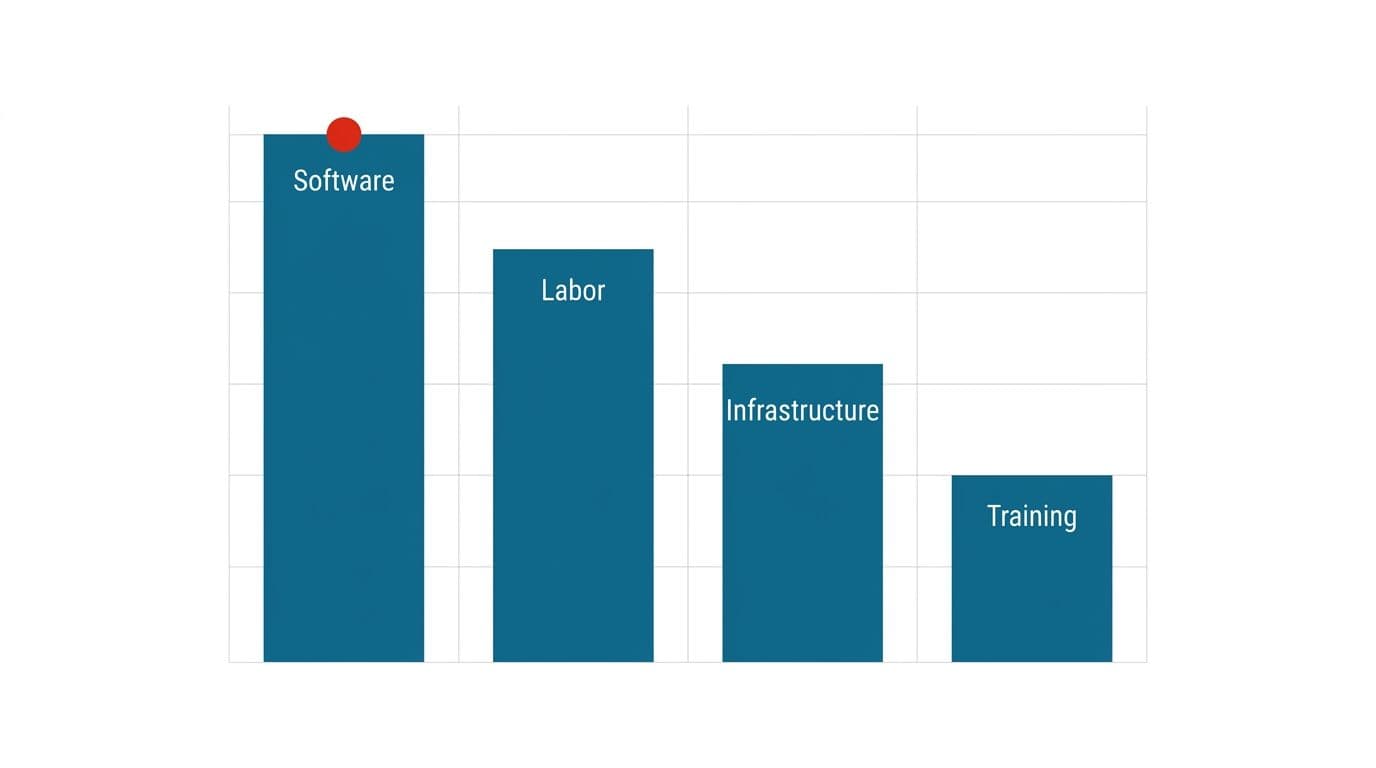
For a small operation, the sensible scope is narrow. Automate the single document type that consumes the most hours, connect it to the accounting package you already use, and stop there. Full orchestration is a cost you take on when you have multiple systems and departments to coordinate, not before. We'd rather tell you to keep your spreadsheet than sell you a platform you'll resent.
An ERP for nonprofits raises its own version of this. The choice should weigh audit trail quality above feature count.
Smaller fintechs also underrate fintech support automation as an early win. Credit automation software for financial services can start as document extraction plus a decision checklist long before it becomes a scored model.
On data partnerships, the practical note for smaller firms is this. Structured, normalized document data is what makes any future partnership possible, whether that's an embedded lending arrangement or a shared risk signal. Firms with clean entity resolution can enter data partnerships quickly, while firms without it tend to spend months on cleanup first, which is often where such efforts stall at the pilot stage.
What to do next
Pick one document type. Count the hours it costs you this month, note where it waits rather than where it's processed, and write down who would own the decision if a machine made it. That three-part answer tells you whether fintech document automation is worth investing in, and where to start.
If you want a second opinion on what's worth automating and what isn't, book a free automation audit. We'll look at your actual process and tell you plainly if the answer is to build nothing. You can also see how we work before committing to anything.
Wondering what this would take against your own systems?
The audit costs nothing, and you keep the costed plan and the risks whether you go ahead or not.
Book a free automation auditHitasoft
LinkedInHitasoft has built software since 2008, for companies that mostly do not have an IT department. These pieces are written by the people who do the integrations rather than by anybody in marketing.