
Every staffing agency eventually hits the same wall. Call volume climbs. Clients expect round-the-clock responsiveness. The only obvious lever seems to be hiring more people to answer phones, log intake details, and route messages. Payroll swells. Off-the-shelf answering platforms bill you per seat and per minute. When you want to change a workflow, you're stuck waiting on a vendor roadmap that might never prioritize your request.
There's a structurally better path. Purpose-built staffing cost reduction software, powered by custom voice AI agents and automated intake pipelines, lets you absorb more volume without adding headcount. You avoid renting someone else's platform forever. This article breaks down the architecture, the operational modes, and the ownership model that make it work.
What Is AI-Driven Staffing Cost Reduction?
AI-driven staffing cost reduction is the deployment of custom voice models, API orchestration engines, and multi-tenant management systems to run front-desk call handling and admin work on its own. It structurally lowers a company's dependency on bloated manual headcount and off-the-shelf HR subscription software.
Put plainly, you stop hiring a person for every extra block of call volume. Instead, you build an AI voice answering service that fields inbound calls. It asks the right qualifying questions, records the answers into a structured form, and involves a human only when the situation truly needs judgment. The people you keep become higher-leverage. They handle escalations and relationships rather than repetitive intake.
The distinction that matters is custom. Generic answering apps automate a narrow slice of the workflow. They lock you into their pricing and feature set too. A custom AI automation stack is engineered around your actual clients and your margins. It belongs to you. Start by mapping which of your workflows are ripe for automation first.
Architectural Core: Multi-Tenant AI Telephony Infrastructure
Moving away from a traditional call-center staffing model doesn't mean surrendering operational control. It means rebuilding the plumbing so control is centralized and programmatic rather than tied to how several people are logged in. Sketch your current call flow before you touch any code.
Telephony and Voice Stack
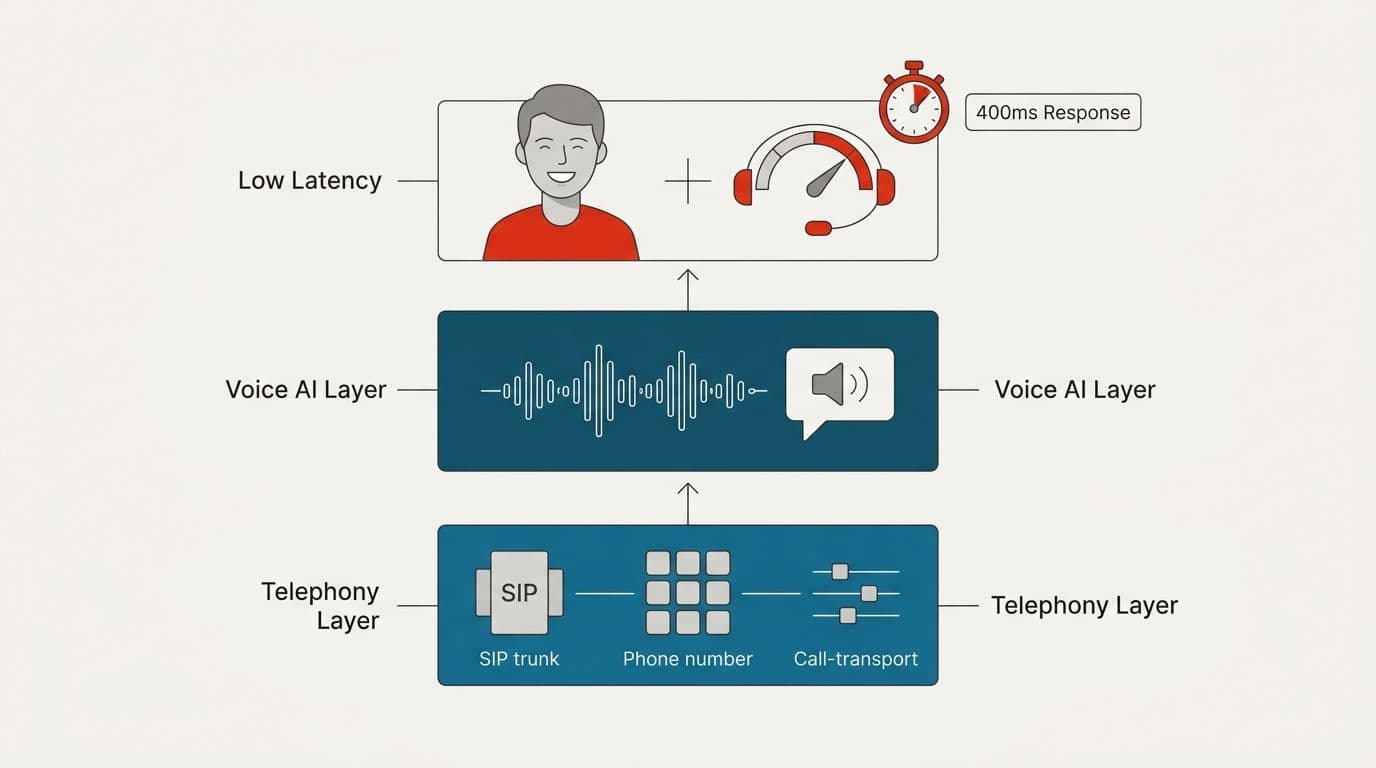
At the foundation sits your telephony layer. Twilio or Telnyx handle SIP trunking, number provisioning, and the raw call transport. On top of that, a conversational voice layer, Retell AI, Vapi, or a custom LLM pipeline, delivers the low-latency, natural-sounding dialogue that callers experience. This separation keeps the system modular. You swap voice providers or tune models without ripping out your telephony backbone.
Low latency is not a luxury here. The difference between a 400-millisecond and a 1.2-second response is the difference between a caller who trusts the agent and one who starts asking for a human. A well-tuned multi-tenant voice AI architecture treats delay as a first-class engineering constraint. Set a latency budget early and test against it.
Granular Multi-Client Setup
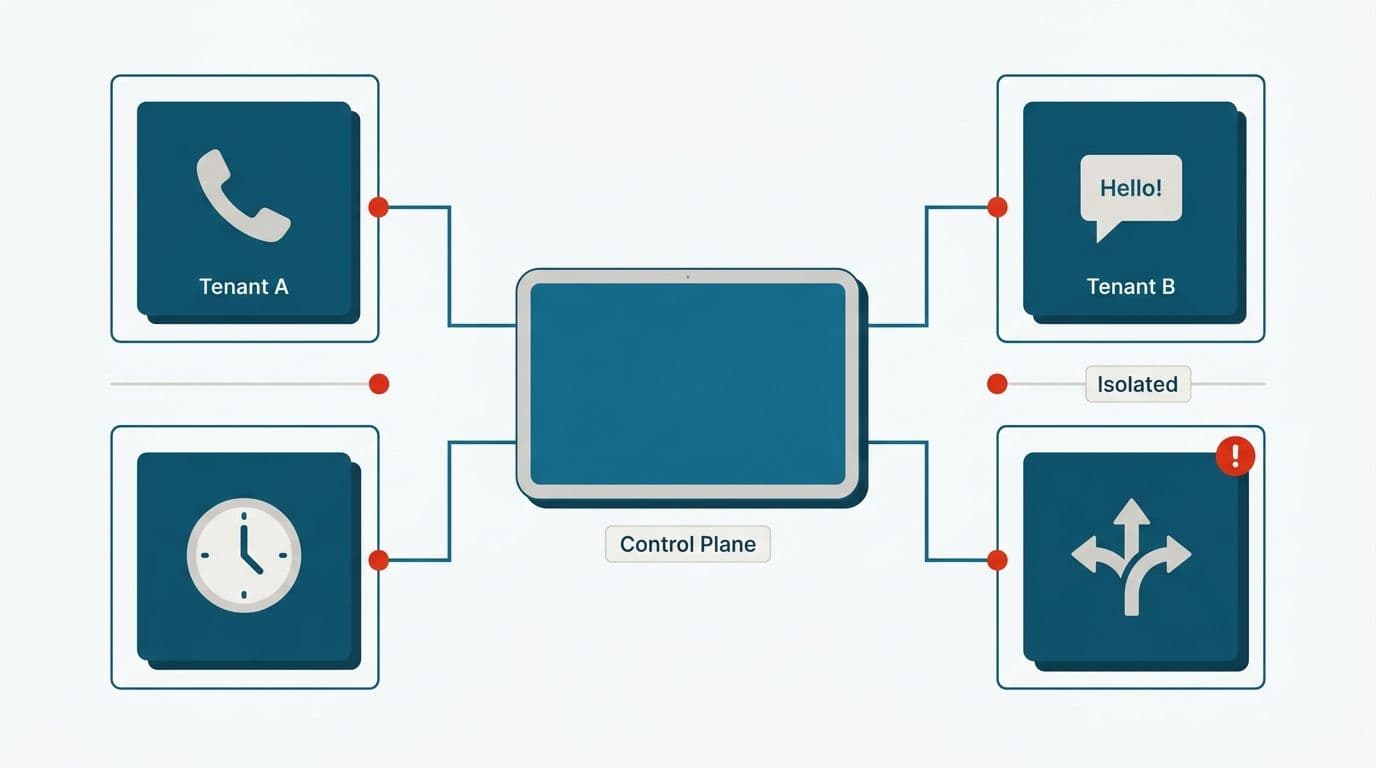
Because staffing agencies serve numerous clients, isolation is non-negotiable. The platform maintains strict separation across:
- Client phone numbers and caller ID
- Custom greetings and brand voice
- Business hours and after-hours behavior
- Industry-specific intake questions
- Transfer numbers and escalation paths
- Notification contacts for post-call dispatch
Each tenant operates as if it owns the whole system, while you manage them all from one control plane. No data bleeds between accounts. That matters when you're handling everything from bail bond details to protected health information. Audit your tenant isolation before you onboard the first regulated client.
Flexible Call Handling Modes
Different clients call for various balances of automation and human touch. So do diverse times of day. A mature platform lets you configure the blend dynamically:
- AI-First: The AI answers every initial call, resolves FAQs, and transfers to a human only when needed. Ideal for high-volume, low-complexity lines.
- Human-First: Live agents answer first, and AI serves as overflow backup during peak volume or off-hours, so no call goes unanswered.
- AI-Only: Fully automated 24/7 resolution for standard inquiries. appointment confirmations, hours, directions, status checks.
- Human-Only: Dedicated human routing where AI runs quietly in the background, transcribing and summarizing for the record.
This flexibility is the single biggest driver of savings. You dial automation up for routine clients. You keep a human touch where it earns its cost. Pick one client and test the AI-First mode this week.
Automated Answering, Triage, and Warm Transfers
The value of an AI voice answering service isn't just that it picks up. It's that it does the work a receptionist would, at a fraction of the cost. Map the receptionist tasks you want offloaded first.
Inbound and Outbound Telephony Features
The system supports the full set of call-control primitives your operation expects. Think hold, mute, dynamic transfer, custom voicemail per client, and intelligent call queues that prioritize urgent callers. Outbound capability means the same infrastructure handles callbacks and follow-ups without a separate tool. Try routing your appointment reminders through it next.
Context-Aware Information Capture
A human agent handles one call at a time. AI agents field concurrent calls without degrading service. On each call, the agent works through the correct industry-specific intake questions. It captures the answers as structured data and logs a caller disposition. That means new lead, existing client, or urgent escalation.
That structured output is what makes downstream automation and reporting possible. Define your disposition categories before launch so the data stays clean.
Seamless Live Agent Escalation
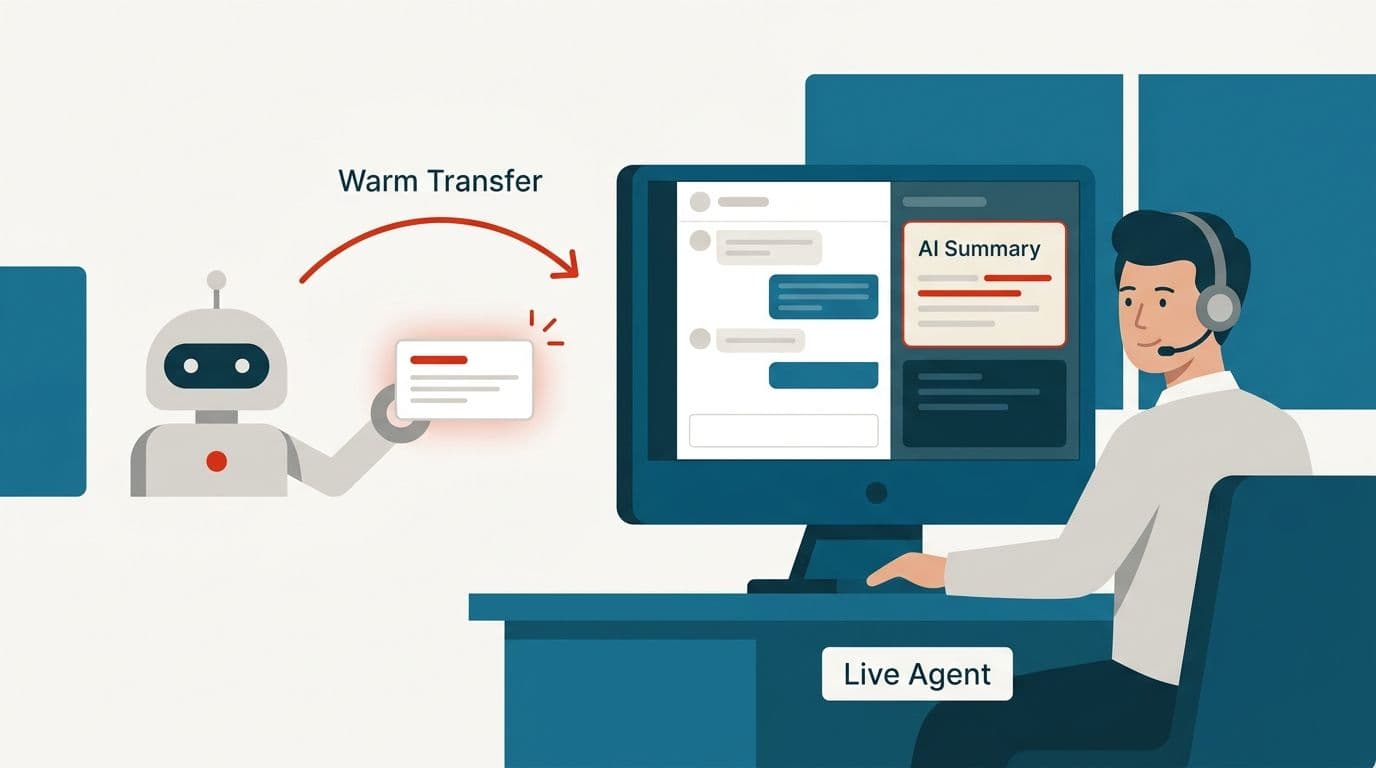
When a caller genuinely needs a person, the handoff has to be graceful. The system runs a warm transfer. Before the live agent even picks up, their screen already shows the real-time transcript and an AI-generated summary of what the caller wants. The agent starts the conversation informed, not from a cold "How can I help you?"
This is the "human-in-the-loop" principle done right. Automation carries the repetitive load, and people arrive fully briefed. Review a few transfer transcripts each week to refine the summaries.
The "Human-in-the-Loop" Live Agent and VA Workstation
Automation reduces headcount. It rarely eliminates it entirely. The agents and virtual assistants you keep deserve tools that make them far more productive. Audit your team's daily friction points first.
Unified Agent Dashboard
Your live VAs and agents manage incoming calls across many sub-brands from one clean interface. There's no juggling distinct logins or platforms per client. A single workstation surfaces everything, correctly labeled by tenant. Give your team a walkthrough before their first live shift.
Automated Context Pop-Ups
The moment a call connects, the screen automatically renders the correct business name and the active script for that client. The relevant intake form and specific transfer instructions appear too. The agent never has to remember which client they're representing or scramble for the right script. This alone doubles the number of accounts a single VA handles confidently. Test the pop-ups with your busiest VA and tune from there.
Virtual Assistant Task Management
Because staffing operations extend beyond calls, the platform includes a native task management module so VAs stay accountable:
- Assign committed VAs to specific clients for continuity.
- Track tasks with due dates, priority levels, status updates, and completion notes.
- Monitor real-time VA activity reporting to see operational output at a glance.
Managers get visibility into who is doing what. They see which clients consume the most effort and where the next efficiency gain lives. Set up a weekly review of the activity report to catch bottlenecks early.
Industry-Specific Intake Workflows and Post-Call Automation
Generic scripts fail in high-touch verticals. The value of a custom platform is that intake forms are tailored to how each industry actually operates. Start with the vertical that drives most of your revenue.
Tailored Form Templates
- Bail Bonds: Urgent intake capturing defendant details, jail location, charge information, and immediate alert routing to the on-call agent. because minutes matter.
- Legal and Law Firms: Case-type classification, conflict-check basics, consultation scheduling, and claim details so attorneys receive qualified, pre-organized leads.
- Healthcare and Clinics: Basic symptom triage, appointment requests, and insurance verification prompts, handled with the discretion these calls demand.
- General Small Businesses: Standard lead capture, service inquiries, and callback requests that keep opportunities from slipping through.
Post-Call Multi-Channel Dispatch
The work doesn't end when the call does. The system automatically generates the call recording, an AI transcript, and a disposition. Then it dispatches these instantly to the client via SMS and email. Clients see fully documented interactions in near real time without lifting a finger. That's a service level that traditionally required a staffed back office.
If you already run a CRM, these outputs flow straight into it. Our guide on how to integrate AI into an existing CRM walks through connecting these pipelines so intake data lands where your team already works. Map your dispatch channels before you go live.
conventional HR & Answering SaaS vs. Custom AI Automation Stack
| Operational Metric | Off-the-Shelf SaaS / Answering Services | Custom AI Telephony & VA Stack |
|---|---|---|
| Licensing Model | High monthly per-seat / per-minute fees | Fractional API compute costs (Twilio/Telnyx/Retell) |
| Software Ownership | Vendor lock-in with restricted export options | 100% source code & cloud account client ownership |
| Call Capacity | limited by human seat availability | Effectively unlimited concurrent inbound and outbound calls |
| Multi-Tenant Setup | Requires individual account management | Centralized multi-client management with isolated data |
| Custom Workflows | Static pre-built templates | API/webhook-ready for custom CRM/ERP integrations |
The pattern is clear. SaaS answering services convert every bit of growth into a regular bill. They cap your capacity at how a handful of seats you're willing to fund. A custom stack converts growth into marginal compute cost, cents per call rather than dollars per seat, while handing you the asset. Run the numbers on your own call volume to see the crossover point.
Client Dashboard and transparent Usage Analytics
Retention in the staffing business runs on trust. Trust runs on transparency. A client self-service portal turns your operation into something clients see and verify. Make that portal part of your onboarding pitch.
The interface is clean and mobile-friendly, giving end clients direct visibility into:
- Inbound and outbound call logs, recent activity, and voicemails.
- Call recordings, searchable transcripts, and AI-generated summaries.
- Minute tracking and plan usage metrics for accurate answering-service accounting.
A client logs in at midnight and confirms exactly how their calls were handled. They see the minutes consumed against their plan. Billing disputes evaporate and renewals get easier. Openness becomes a competitive differentiator rather than a support burden. Offer a portal demo on your next renewal call.
Future-Proofing: API-First Architecture and Full Code Ownership
The biggest hidden cost of off-the-shelf software isn't the monthly fee. It's the ceiling. Eventually you need an integration the vendor won't build, and you're stuck. Plan your architecture so that day never comes.
Developer-Ready Middleware
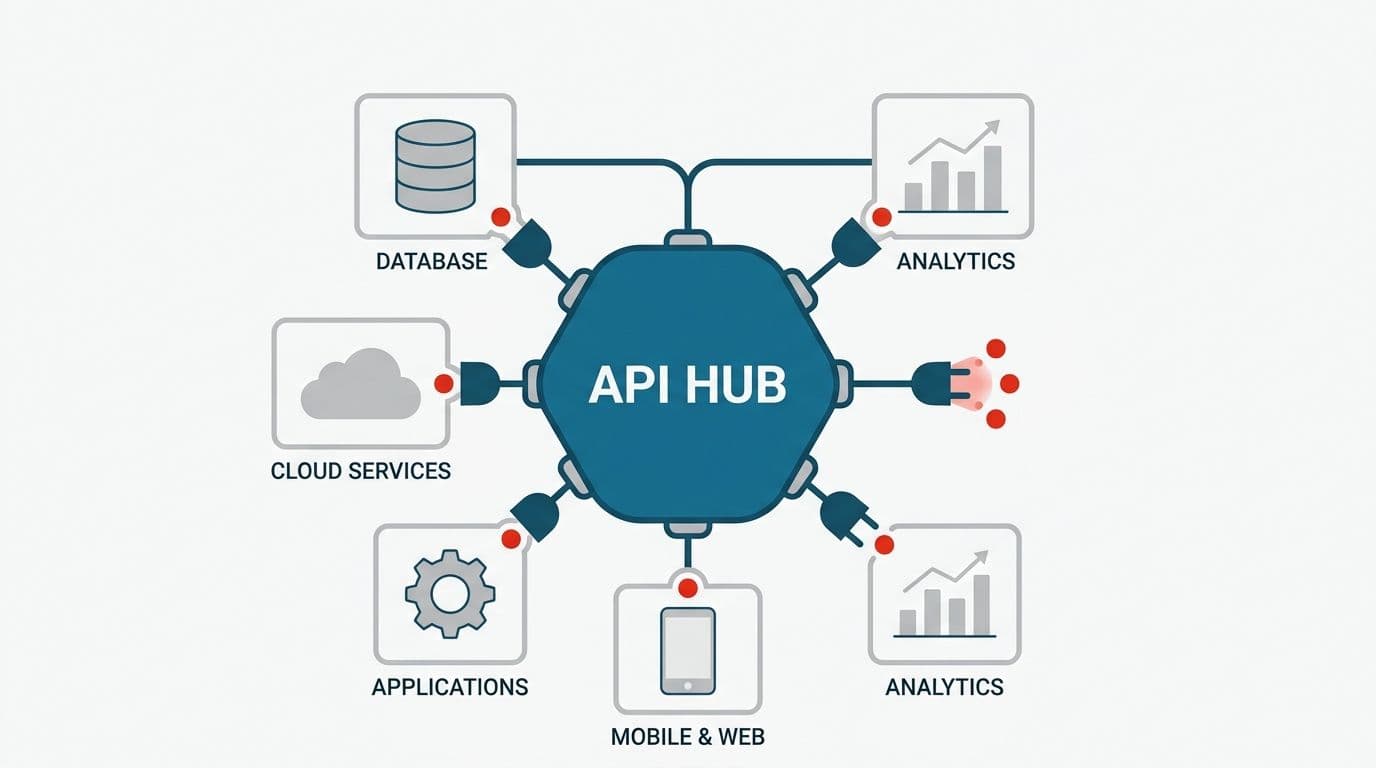
A custom platform is built API- and webhook-first from day one, so it expands with your business. New CRM connections, payment gateways, or vertical-specific tools plug in as your client roster evolves. The same architectural discipline that lets teams integrate an LLM into an EdTech platform applies here. Clean interfaces, modular services, and room to grow. Document your integration roadmap before you write the first connector.
Complete Asset Ownership
Most importantly, there's no proprietary lock-in. All source code, database structures, and third-party API accounts stay fully under your control. If you decide to change voice providers, migrate clouds, or bring development in-house, nothing holds you hostage.
You own the machine that reduces your costs. You don't rent a monthly right to it.
If you're ready to design this system around your own clients and margins, Hitasoft's custom AI and API integration services cover the telephony, voice-model, and multi-tenant engineering end to end. Book a scoping call to map your first build.
Frequently Asked Questions
How much can staffing cost reduction software actually save? Savings come from two places. You eliminate per-seat SaaS licensing and absorb call growth without proportional hiring. Because AI agents handle unlimited concurrent calls at fractional API compute cost, agencies typically shift the bulk of frequent intake off human payroll while keeping a lean team for escalations.
Will AI answering replace my human agents entirely? No. The model is human-in-the-loop by design. AI handles repetitive intake and FAQs, then runs warm transfers with full transcripts and summaries so human agents focus on judgment-heavy calls and relationships. You choose the AI-to-human balance per client and per time of day.
How does multi-tenant voice AI architecture keep client data discrete? Each tenant has isolated phone numbers, greetings, intake questions, transfer paths, and notification contacts, with strict data separation enforced at the platform level. You manage every client from one console while ensuring no information crosses between accounts. That's critical for legal, bail bonds, and healthcare workflows.
Can this integrate with my existing CRM and tools? Yes. The platform is built API- and webhook-ready. Call recordings, transcripts, dispositions, and intake data flow into your CRM or payment systems, and expand as your integration needs grow.
Who owns the software and the underlying accounts? You do. All source code, database structures, and third-party API accounts (Twilio, Telnyx, Retell, and others) stay under your full ownership. That eliminates vendor lock-in and the perpetual licensing fees that come with off-the-shelf answering services.
Wondering what this would take against your own systems?
The audit costs nothing, and you keep the costed plan and the risks whether you go ahead or not.
Book a free automation audit
Arun Andiselvam
LinkedInI am a startup veteran who has built five brands. I sold the first, an SEO tool, for a six figure exit, and now build AI automation products for businesses. I bootstrapped every one of them from day one.